


The Numbers Don't Lie: America's Space Machine Hits Warp Speed, But Can It Save Anyone Else?
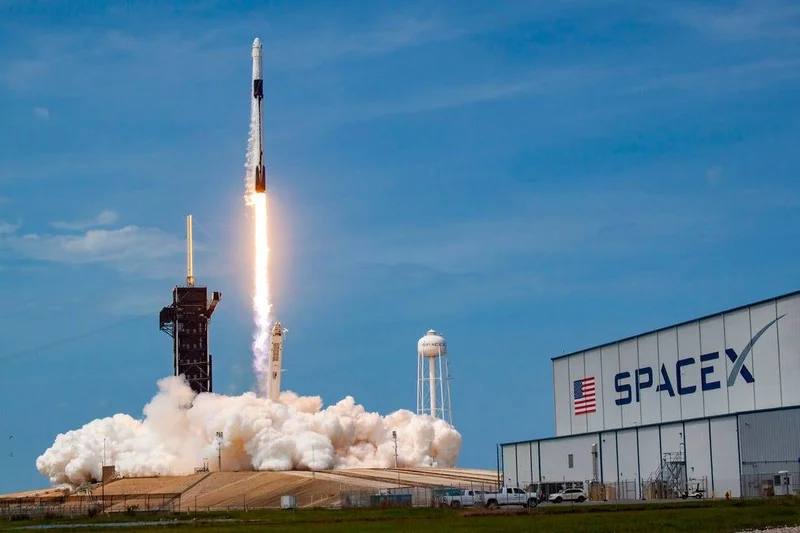
SpaceX lit up the Florida night on November 10, 2025, with another Starlink mission, launching a Falcon 9 from Cape Canaveral. At 10:21 p.m. EST (that's 0321 UTC for those keeping score), booster B1096 roared off the pad, pushing 29 more broadband internet satellites into low Earth orbit. The deployment was confirmed just over an hour later. On the surface, it was business as usual for Elon Musk's operation, another notch in the belt. But zoom out, and the data tells a far more compelling, and frankly, concerning story.
This wasn't just another launch. It was the 94th orbital class rocket to leave Florida's spaceport in 2025, shattering the previous annual record set just last year, as reported by Florida annual launch record broken with late-night Starlink flight - Spaceflight Now. SpaceX, as the primary mover, accounted for a staggering 88 of those launches – about 95% of the total, to be exact. This isn't just market dominance; it's a near-monopoly on American access to orbit. We're talking about an operational tempo that U.S. Space Force 2nd Lt. Christian Jackson could only dream of in 2022 when he spoke of an "airport-like flight environment" and a goal of 100 launches per year. We’re practically there.
The raw numbers are almost absurd: 90 boosters and 194 payload fairings handled by Port Canaveral in Fiscal Year 2025 alone. That’s a physical manifestation of this relentless cadence. I've looked at hundreds of these logistical reports, and this level of throughput from a single commercial entity is genuinely unprecedented. The Falcon 9 booster B1096 itself, on its third flight, pulled off its autonomous landing on 'Just Read the Instructions' with the kind of casual efficiency we've come to expect. This was the 532nd booster landing to date, a statistic that, when you pause to consider it, reshapes our understanding of reusable rocketry. It’s like watching a fleet of incredibly complex, high-performance aircraft land themselves after every flight, day in and day out. The system is humming.
However, even a finely tuned machine like SpaceX isn't immune to external friction. This particular launch was delayed, not by technical issues, but by an FAA mandate restricting commercial launches to late-night hours. The reason? An air traffic controller shortage during a government shutdown. It’s a stark reminder that even as the commercial space sector accelerates, it remains tethered to terrestrial, bureaucratic realities. How sustainable is this "airport-like" environment when the ground crew is constantly understaffed or sidelined by political squabbles? It's a methodological critique worth making: the data on launch cadence is impressive, but it doesn't always reflect the underlying systemic vulnerabilities.
The Rescue Dilemma: When Efficiency Meets Incompatibility
Now, let's pivot from the triumphs of launch to a far more troubling narrative unfolding simultaneously: the plight of the three-person Chinese Shenzhou-20 crew. They’ve been delayed on the Tiangong space station since April, originally slated for a November return. The suspected culprit? A tiny piece of space debris, a problem that’s growing exponentially, perhaps accelerated by past anti-satellite weapon (ASAT) tests.
The immediate, emotional reaction from the public, amplified across social media, was a call for SpaceX to perform a rescue mission, as highlighted in SpaceX and Musk called on to rescue China's Shenzhou-20 crew - theregister.com. "Just send Elon," was the implied, if not explicit, sentiment. It’s a reflex we saw earlier in 2025 when President Trump reportedly urged Musk to rescue a Boeing Starliner crew. Musk, ever the showman, pledged SpaceX would "bring them back." It’s a comforting thought, a narrative of American ingenuity riding to the rescue. But my analysis of the actual data suggests a colder, harder reality.
A SpaceX Crew Dragon rescue for Shenzhou-20 is currently, and probably for the foreseeable future, not feasible. The reasons are brutally practical: incompatible docking systems. You can’t just hook up a Ford to a Ferrari without significant, bespoke engineering, and even then, it's a high-risk proposition. Add to that the non-spacewalk-rated Chinese launch suits – a critical detail if a direct transfer were even considered – and the fact that the next Crew Dragon launches (NASA Crew-12, Vast-1) aren't scheduled until March/April and June 2026, respectively. The timeline simply doesn't align with an urgent, immediate rescue.
This isn't just a technical problem; it's a geopolitical one. Political obstacles make US-China space cooperation for such a mission incredibly difficult. The very notion of it highlights a critical flaw in our fragmented spacefaring ecosystem. We have a world where one nation's commercial entity can launch rockets with unprecedented frequency, breaking records left and right, yet it effectively operates on a different gauge of track from another major space power. When a crisis hits, that operational efficiency becomes insular. It begs the question: if the commercial sector is leading the charge into space, who is responsible for establishing common, interoperable safety protocols across national programs? Or are we simply resigned to a future where national space programs are effectively isolated islands, technologically and politically?
The Data's Cold Verdict: Isolated Success, Shared Risk
SpaceX's relentless cadence is a testament to engineering prowess and operational efficiency. The numbers are undeniably impressive, a clear indicator of American leadership in commercial space launch. But this very success, this hyper-specialized efficiency, underscores a profound vulnerability. We're building incredibly fast, incredibly reliable systems that excel within their own parameters. Yet, when a problem like the Shenzhou-20 delay arises, a problem that doesn't fit neatly into one nation's operational flowchart or one company's product line, the entire system grinds to a halt. The data shows us a future of isolated, albeit spectacular, successes, rather than a truly integrated, resilient global space infrastructure. It’s a harsh reality check for anyone hoping that technological dominance automatically translates into universal solutions.