


Buffett's Last Warning: How CEO Pay Became a Self-Perpetuating Machine
You don’t need a sophisticated algorithm to spot the pattern. On Thursday, Tesla investors greenlit a compensation package for Elon Musk that could, under a very specific set of circumstances, be worth up to $1 trillion. By Friday, a direct competitor, Rivian, had announced a new, decade-long package for its own CEO, RJ Scaringe, worth $4.6 billion.
The timing isn’t a coincidence. It’s a correlation so tight it borders on causation. This is the modern CEO compensation cycle, operating not in quarterly reports or annual reviews, but in a matter of hours. And in his final letter to shareholders, Warren Buffett, a man whose entire career is built on identifying predictable patterns, just gave it a name: a feedback loop of envy and greed.
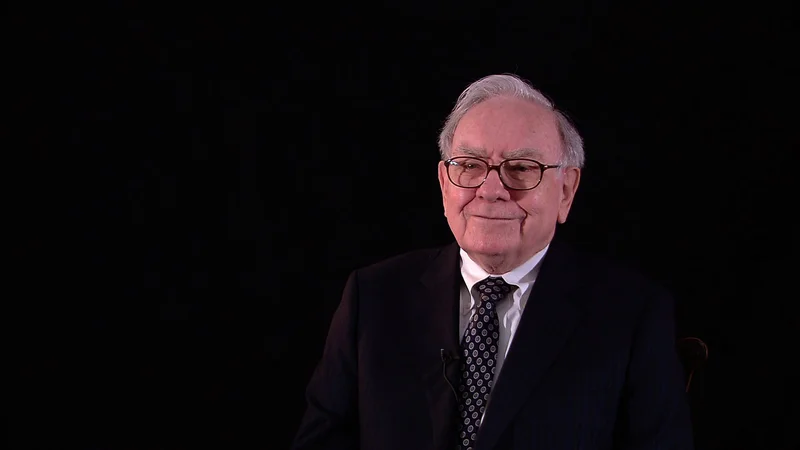
Buffett, who is set to hand the Berkshire Hathaway reins to Greg Abel, didn’t mince words. He described a system where the primary driver of a CEO’s pay isn’t necessarily performance, but the compensation of their peers. “What often bothers very wealthy CEOs—they are human, after all—is that other CEOs are getting even richer,” he wrote.
This isn’t just folksy wisdom from an aging icon. It’s a clinical description of a flawed mechanism. And we just watched it play out in the EV sector in real-time.
A Feature, Not a Bug
What Buffett diagnosed in his letter is a classic case of unintended consequences. He points out that rules requiring public companies to disclose CEO pay—rules intended to induce a sense of shame or at least moderation—have completely backfired. Instead of a ceiling, disclosure created a scoreboard.
The data supports his thesis unequivocally. A report from the Institute for Policy Studies found that compensation among the largest low-wage employers in the U.S. climbed by roughly a third—to be more exact, 34.7%—between 2019 and 2024. The CEO-to-worker pay ratio, a metric designed for that very shaming effect, swelled from 560:1 to 632:1 over the same period. The mechanism isn't dampening the effect; it's amplifying it.
It's a system of institutionalized envy. A CEO at company ‘A’ sees the package at company ‘B’ and, as Buffett notes, “subtly conveyed to his board that he should be worth more.” The board, often stacked with allies and compensated handsomely themselves, has little incentive to push back. Why would they?
I've looked at hundreds of these proxy filings, and this particular trend toward "moonshot" packages, modeled after Musk's, is a fascinating and troubling mutation. They are structured less like traditional compensation and more like a venture capital bet on a single executive (a massive key-person risk, as Norway’s sovereign wealth fund rightly pointed out when voting against Musk's deal). The headline numbers are astronomical, contingent on hitting market cap targets that seem pulled from science fiction. Musk’s requires Tesla to reach an $8.5 trillion valuation. What does a number that large even mean in terms of fundamental value? How do you model the risk of a package where the payout is an order of magnitude larger than the GDP of most countries?
The Illusion of Alignment
Proponents will argue these packages perfectly align the CEO’s incentives with those of the shareholders. If the stock price goes up, everyone wins. It’s a clean, simple narrative. It’s also dangerously incomplete.
The structure of these deals creates an incentive for immense, short-term risk-taking to chase headline-grabbing valuation multiples, not necessarily to build sustainable, long-term enterprise value. The focus shifts from operational excellence and free cash flow (the metrics Rivian’s package at least gestures towards) to a singular obsession with market capitalization. It’s like telling a pilot their bonus is tied only to achieving maximum altitude, with no regard for fuel consumption, engine strain, or the flight path. You might set a record, but the landing is far from guaranteed.
This is where the dissent from a major institutional investor like Norges Investment Management becomes so critical. Their objection wasn’t emotional; it was a risk assessment. They cited the “total size of the award, dilution, and lack of mitigation of key person risk.” These are the cold, hard variables that get lost in the excitement of a trillion-dollar figure. A package this large doesn’t just pay a CEO; it fundamentally alters the company’s capital structure and risk profile.
Buffett’s own compensation stands as a stark outlier: an annual salary of $100,000. While his immense wealth obviously comes from his equity in Berkshire (a fact that makes his situation fundamentally different), his salary is a deliberate signal. It suggests the job of a CEO is that of a steward, not a star player demanding a max contract. The current trend suggests the opposite. The CEO is no longer just running the company; they are the company’s primary lottery ticket. And every other company now feels it needs a ticket of its own.
The Incentives Are Perfectly Aligned—For Escalation
Let’s be clear: this system isn’t broken. It is working exactly as it was unintentionally redesigned to. The inputs—human envy, peer-group benchmarking, compensated compensation committees, and the allure of lottery-ticket payouts—all push in a single direction: up. There is no natural governor on the machine. Buffett's final letter wasn't a complaint; it was a schematic diagram of a perpetual motion machine for executive pay. The Musk and Rivian deals aren't outliers; they are the logical, inevitable output. The numbers aren't lying, and they suggest this is just the beginning.