


Let's get one thing straight. When you read a headline about a company "streamlining operations" or "realigning for future growth," just replace all that corporate garbage with the truth: "We're firing a bunch of people."
It's the oldest game in the C-suite playbook, a ritualistic bloodletting to appease the angry gods of Wall Street. And right now, those gods are demanding a sacrifice. You see it everywhere. Layoffs are piling up, raising worker anxiety. Here are some companies that have cut jobs recently. Amazon, UPS, Microsoft, Target... the list of companies handing out pink slips is growing faster than a Silicon Valley valuation in a bubble. The official story is always some polished, focus-grouped nonsense about "economic headwinds" or "synergistic restructuring."
Give me a break.
We're drowning in a sea of corporate euphemisms designed to mask a simple, brutal reality: your job is disposable. It’s a line item on a spreadsheet, a cost to be cut, a resource to be optimized away the moment it becomes inconvenient. And they’ve found a shiny new excuse that’s even better than the old ones.
The New Corporate Hitman is Called "AI"
The latest bogeyman is Artificial Intelligence. It’s the perfect scapegoat. Amazon is axing 14,000 corporate jobs while CEO Andy Jassy talks about how generative AI will change the workforce. Microsoft is gutting its Xbox division while pouring billions into AI. Lufthansa is shedding 4,000 jobs, pointing to—you guessed it—AI and digitalization.
But here’s the kicker, the part they don't put in the press release. A Georgetown professor, Jason Schloetzer, hit the nail on the head: "it’s not so much AI directly taking jobs, but AI’s appetite for cash that might be taking jobs."
Read that again. The robots aren’t coming for you. Not yet. It's the cost of building the robots that’s getting you fired.
This is a whole new level of corporate insanity. It’s like a giant, cash-hungry bonfire has been lit in the middle of every boardroom, and the fuel is your salary. Executives are gleefully tossing thousands of employee paychecks into the flames to keep their precious AI projects burning, all on the vague promise that someday, a magical profit-phoenix will rise from the ashes.
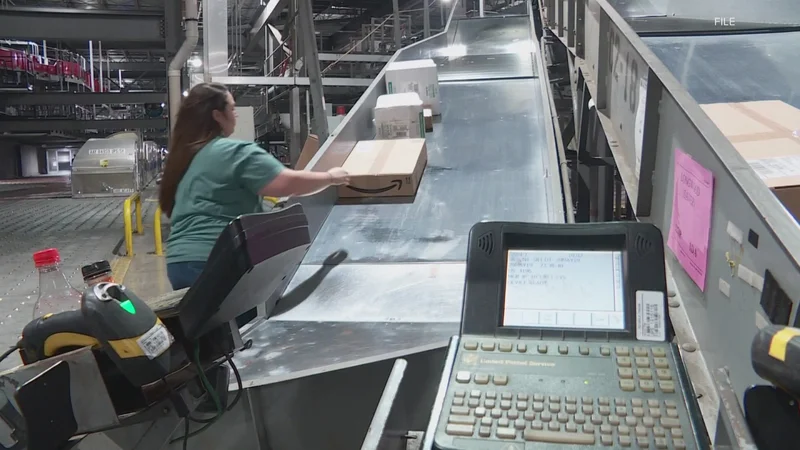
So when a CEO talks about "investing in AI," what he's really saying is that he's taking the money he used to pay you and gambling it on a high-tech lottery ticket. And if it doesn't pay off? Well, that's a problem for the next round of layoffs, isn't it? What happens when this grand AI experiment fails to deliver the promised utopia of endless profits? Who takes the fall then? I’m pretty sure it won’t be the guys with the corner offices.
Same Old Song, Just a Louder Drum
Of course, AI is just the new, trendy excuse. Most companies are still using the classics.
Take Target. They're cutting 1,800 corporate jobs because, according to their COO, "too many layers and overlapping work have slowed decisions." This is brilliant. No, it's beyond brilliant—it's a masterclass in shifting blame. Think about it. Who built all those "layers"? Who hired for that "overlapping work"? It wasn't the project manager in aisle seven. It was the very executives who are now patting themselves on the back for "streamlining" the mess they created. They built a dysfunctional, bloated bureaucracy and now the people at the bottom have to pay for it with their livelihoods.
It's the same tired story everywhere. UPS is shedding a staggering 48,000 jobs. Nestlé, 16,000. Procter & Gamble, 7,000. Even Novo Nordisk, the company printing money off Ozempic, is cutting 9,000 people. They blame rising costs, tariffs, restructuring... anything but their own lack of imagination.
It’s like every company in America is run by a homeowner who, upon discovering a leaky faucet, decides the best solution is to bulldoze the entire house. The logic is just... gone.
And while all this is happening in the private sector, the federal government is twisting the knife. Thousands of federal jobs cut, and a government shutdown that’s left countless more without a paycheck, staring at their bills piling up. The whole system feels like it’s grinding to a halt, and every single person I know is looking over their shoulder, wondering if they’re next. The anxiety is palpable. You can feel it in the grocery store, at the gas station. That quiet hum of fear.
This ain't some temporary dip. This feels different. It feels like a fundamental rewiring of the social contract, where the concept of a stable career is being treated as a quaint, outdated relic. We’re all just gig workers now, whether we know it or not, waiting for an email from an algorithm that tells us we've been "deprovisioned." It's offcourse a terrifying thought, but here we are.
So, We're All Just Overhead Now?
Let's be real. This isn't about efficiency or future-proofing. It's about a complete and total dehumanization of the workforce. We're no longer employees or team members. We are "headcount." We are human capital. We are liabilities on a balance sheet to be minimized. The goal isn't to build a better company; it's to build a leaner one, even if it's just a skeleton. And the message from the top is loud and clear: nobody is safe, and your loyalty means absolutely nothing.