


So get this. A new study drops from some researchers at Temple University’s Lewis Katz School of Medicine, and it lays out a reality so bizarre it has to be true. Parents, many of whom have spent the last few years side-eying flu shots and basically treating the COVID vaccine like a political statement, are suddenly lining up, sleeves rolled up for their newborns, to get a brand-new immunization for RSV.
What gives?
Let's be real, after the absolute circus of the last few years, you’d expect any new shot to be met with an automatic, ten-foot-pole level of suspicion. But that’s not what’s happening with Beyfortus, the new antibody treatment to protect infants from respiratory syncytial virus. Instead, according to the study in BMC Pediatrics, there’s an "unusually strong early interest."
The answer, it turns out, is depressingly simple: the pediatrician said so.
That's it. That's the whole magic trick. Not some brilliant CDC immunizations campaign, not a viral TikTok video, and certainly not a sudden mass awakening to the nuances of virology. Just a trusted doctor in a room, looking a new parent in the eye and saying, "This is what we should do." It turns out that single, human relationship outweighs years of cable news brain-rot and Facebook "research."
And this is where my brain starts to short-circuit. These are the same people who, according to the study, wave off the flu shot because they "know someone who got it and still got sick." The same people who see the COVID shot as ineffective for the exact same reason.
They've witnessed, and internalized, the single biggest failure of public health messaging in our lifetime: the complete inability to explain that "working" doesn't mean "creates an impenetrable magic forcefield around you." It means "drastically reduces your chances of ending up in a hospital bed with a tube down your throat."
This isn't just a communication failure. No, 'failure' isn't strong enough—this is a catastrophic meltdown of basic scientific literacy, and the people in charge just watched it happen. They spent decades building a system where people just accepted the list of required immunizations for school without a second thought, then seemed shocked when that blind trust evaporated the second things got political and confusing.
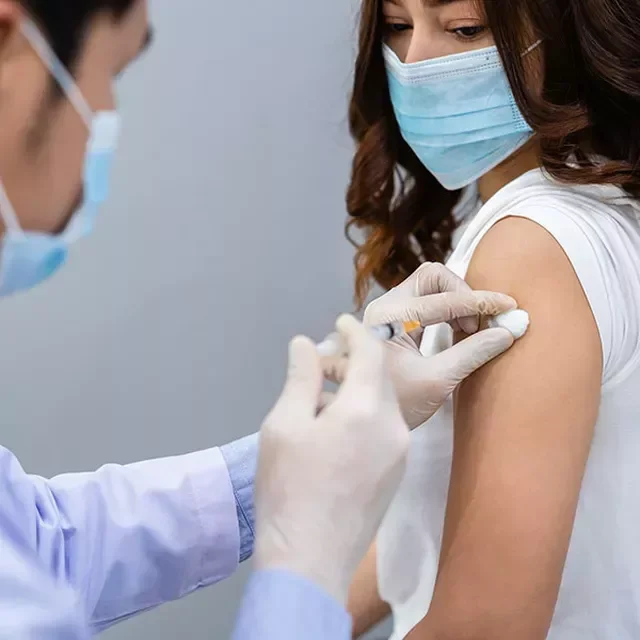
It's like trying to get a straight answer from your cable company about why your bill went up. You get transferred, put on hold, given a script, and you walk away knowing less than when you started. We're so used to being managed and spun by institutions that when someone—anyone—like a local pediatrician gives a straight, simple recommendation, it feels like a revelation. It's the only signal that can cut through the noise.
The researchers, a team including Brittany Hansen and Joshua Somers, found that parents see RSV as a "serious and frightening illness," more so than the flu or COVID for their tiny infants. Offcourse, that makes sense. RSV is the leading cause of hospitalization for babies in the U.S. A newborn struggling to breathe is a primal fear that cuts through all the other nonsense.
But the underlying logic is still broken. Parents are making a risk calculation based on gut-level fear, not a consistent understanding of how any of these childhood immunizations actually function. They think one shot works like a magic spell and the others are duds, all because of a fundamental, widespread misunderstanding of what a vaccine is even supposed to do. And honestly, after the last few years...
Then again, can I really blame them? The goalposts on public health advice seemed to move every fifteen minutes. The messaging was a disaster, a tangled mess of contradictions and condescension. It’s exhausting. Maybe I'm the crazy one for still expecting a coherent national strategy for something as basic as keeping people from dying from preventable diseases.
The arrival of this RSV immunization at the same time we're all still processing the COVID mess gave these researchers a perfect natural experiment. And the results are in. It ain't about the data, or the FDA approval process, or the reams of clinical trial results.
It's about trust.
And we've completely destroyed trust in our big institutions, leaving only these small, localized pockets of it. A parent and their pediatrician. That's all that's left. It’s a bit of a miracle that a desperate search for "immunizations near me" can still end with a real conversation that actually works, that leads to a kid being protected from a nasty virus.
But it's also a terrifyingly fragile system. It tells a story of a massive public failure, one so complete that our entire public health apparatus has become less influential to a new parent than a single fifteen-minute chat in a small examination room. It’s a quiet, hopeful success story that doubles as a screaming five-alarm fire about the state of everything else.
Trust is the New Science ###
So here's the punchline. This isn't really a victory for modern medicine or a testament to a brilliant new product. It's a testament to how little any of that matters anymore. We've reached a point where scientific consensus, federal recommendations, and mountains of data have been reduced to background noise. The only thing that moves the needle is the word of one person you've decided you can still believe. We haven't gotten smarter; we've just outsourced our thinking to the last person in a white coat we haven't written off yet.
Reference article source: