


The Dawn of G-2: A New World Order or a Fleeting Mirage?
Okay, folks, buckle up, because things are getting really interesting on the world stage. I’m talking about Trump's recent, shall we say, unconventional approach to US-China relations, specifically this "G-2" concept he's been throwing around. Now, I know what you’re thinking: "Another Trump headline? Ugh." But hear me out, because this could be a paradigm shift, a complete rewrite of the global playbook.
The idea of a G-2—a world effectively co-managed by the US and China—isn't new. Economist C. Fred Bergsten floated it back in 2005, suggesting the US needed to cultivate key bilateral relationships to navigate a changing world. He saw China as crucial for global growth, exchange rates, and energy. And, honestly, it made sense. The financial crisis of 2008 only underscored the point: without US-China cooperation, the world economy was toast.
But here’s the kicker: back then, China was playing it cool, "hiding its strength and biding its time." Now? Not so much. Under Xi Jinping, China's been flexing its muscles, especially in the Indo-Pacific. And that's where things get complicated. Trump 1.0 actually framed China as a strategic threat, a rival to the US-led global order. This led to the revival of the Quad (India, Japan, Australia, and the US), a move welcomed by ASEAN nations wary of Chinese aggression. So, seeing Trump 2.0 suddenly cozying up to China is, well, jarring. It’s like watching the protagonist switch sides halfway through the movie!
What does this mean for everyone else? That’s the million-dollar question. Our allies in Asia are understandably nervous. They've spent years working with the US to counter Chinese influence, and now they're wondering if Washington is about to pull the rug out from under them. The tariff wars under Trump 2.0 already created uncertainty. Now, this G-2 talk is amplifying those fears. Will the US soften its stance on China? Will it prioritize its relationship with Beijing over its commitments to its allies? How Trump’s ‘G-2’ framing for US-China relations could impact allies
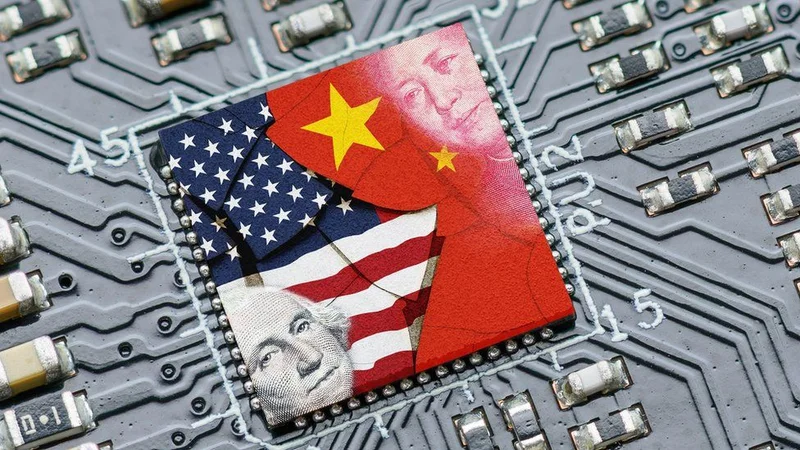
For India, the stakes are particularly high. The US’s previous tariffs strained ties, and now there's talk of a new Quad-like grouping, potentially replacing India with the Philippines. Now, I don’t buy it. India is a major economy and a key regional power. Its inclusion is essential. But the uncertainty is definitely there. And what about Japan and Australia? How far will Trump go with this G-2 engagement? Will his bonhomie with Xi sour, like it did with Putin?
Here's where things get interesting. This G-2 framing, while unsettling, could also be an opportunity. Imagine a world where the US and China, instead of constantly butting heads, actually work together to address global challenges. Climate change, economic stability, pandemics—these are all problems that require cooperation, not confrontation. Maybe, just maybe, Trump’s unorthodox approach could pave the way for a new era of global governance. I know, I know, it sounds idealistic. But isn’t that what progress is all about?
Is This the Start of Something Beautiful?
Look, I'm not saying it's going to be easy. There are plenty of reasons to be skeptical. China's human rights record, its trade practices, its territorial ambitions—these are all serious concerns that can’t be ignored. But what if, by engaging with China, by treating it as a co-equal power, we can actually influence its behavior? What if we can create a framework where China feels compelled to play by the rules, to act as a responsible stakeholder in the global community? It’s a long shot, I'll admit. But isn't it worth trying? This is the kind of breakthrough that reminds me why I got into this field in the first place.