


MSTR vs. COIN: Decoding the Dueling Crypto Philosophies
The market has a habit of lumping things together. As MicroStrategy (MSTR) and Coinbase (COIN) approach their October 30th earnings calls, they’ve been bundled into the same "crypto stock" category, two tickers rising and falling with the digital tide (MSTR vs. COIN: Which Crypto Stock Is a Better Buy Ahead of Earnings?). This is a tidy narrative, but it's a fundamental misreading of the data. Viewing these two companies as interchangeable is like confusing a gold prospector with the man who sells the maps, the shovels, and owns the only road into the territory.
One is a leveraged, almost spiritually-driven bet on a single asset. The other is a sprawling infrastructure play on an entire ecosystem. As we dissect the numbers ahead of their quarterly reports, it becomes clear that choosing between them isn’t about picking the better crypto stock. It’s about choosing which core economic philosophy you believe will win.
The MicroStrategy Equation: A Software Company or a Bitcoin Vault?
On paper, MicroStrategy sells enterprise analytics software. This segment provides a steady, if uninspired, revenue stream—projected at $116.65 million for the quarter. But let's be clear: the software business is a sideshow. It’s the financial engine used to execute the company’s real strategy: acquiring and holding Bitcoin on a scale that borders on the fanatical. The company’s quarterly results are less a reflection of software sales and more a referendum on the volatile price of a single digital asset, with unrealized BTC gains or losses swinging net income into wildly unpredictable territory.
This makes traditional analysis difficult. The company has a poor track record of meeting Wall Street's expectations (surpassing them in only two of the past eight quarters), but its believers don’t seem to care. The investment thesis isn’t about earnings per share; it's about Bitcoin accumulation. You can almost picture CEO Michael Saylor in a quiet office, the only light coming from a screen displaying a single, fluctuating number—the price of BTC. The rest is just noise.
The analyst projections for MSTR are, to put it mildly, aggressive. TD Cowen’s Lance Vitanza reiterated a Buy rating with a $620 price target, implying a staggering 117.8% upside. The justification for this hinges on the belief that the company will hold nearly 900,000 BTC by 2027. I've looked at hundreds of corporate filings, and the path to that 900,000 BTC figure is, frankly, not immediately obvious from the public data. It would require a level of capital raising, either through debt or share dilution, that is almost unprecedented for a company of this size. What does that do to the per-share value of the underlying Bitcoin? How much leverage is too much before the model breaks under the weight of its own conviction?
This is where the analysis shifts from finance to faith. A valuation narrative from BlackGoat pegs MSTR’s fair value at $663, arguing it’s 57% undervalued (A Fresh Look at MicroStrategy (MSTR) Valuation Following Recent Share Price Volatility). The logic rests on something called the "42 42 Plan" and, crucially, "continued Bitcoin appreciation." This isn't a valuation; it's a prophecy. It presupposes the outcome it's trying to predict. If you believe Bitcoin is destined for the stratosphere, then MSTR is simply a leveraged vehicle to ride that ascent. But it is not a software company in any meaningful sense. It’s a publicly-traded Bitcoin vault with a side hustle.
Coinbase: The Digital Tollbooth of the Crypto Economy
Coinbase presents a starkly different model. It isn't betting on a single asset; it's betting on the entire market's activity. As one of the world's largest crypto exchanges, Coinbase operates as the broker, market maker, and custodian for a burgeoning digital economy. It’s the picks-and-shovels play. Coinbase wins when people trade, stake, borrow, and build—regardless of whether Bitcoin is up or down on the day. Its revenue is a mosaic of transaction fees, stablecoin service charges, and yield from staking activities.
The numbers reflect a more conventional, if still volatile, growth story. Analysts expect a strong Q3, with earnings per share of $1.15 on $1.80 billion in sales, a significant leap from the prior year. And unlike MicroStrategy, Coinbase has a much stronger history of meeting expectations, beating estimates around 60% of the time—to be more exact, in five of the past eight quarters. This suggests a business with more predictable, though not guaranteed, operational levers.
The forward-looking catalysts for Coinbase are also rooted in business development, not just asset price speculation. The recent strategic partnership with Citigroup to provide institutional clients with fiat on-ramps is a powerful signal of mainstream financial integration. This isn't a narrative; it's a contract. It's plumbing being laid to connect the old world of finance with the new.
JPMorgan’s upgrade to a Buy rating points to two potential drivers: the launch of a "Base token" for its Layer 2 blockchain and higher USDC yields for subscribers. Both are product- and service-based initiatives designed to deepen user engagement and expand the platform's utility. Coinbase is building a city, while MicroStrategy is digging for a very specific type of gold. The question for an investor is whether you want to own a piece of the city's entire economy or a leveraged claim on the treasure buried beneath a single plot of land.
The Signal Versus the Leverage
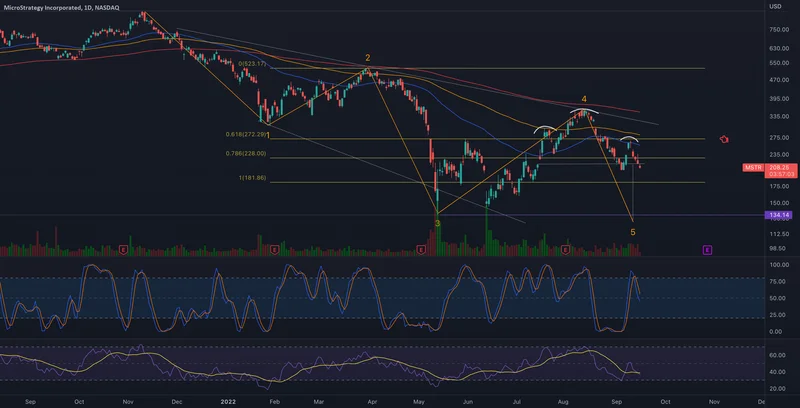
So, which is the better buy? The question itself is flawed. These are two fundamentally different instruments. An investment in MicroStrategy is a pure, leveraged proxy for the price of Bitcoin. Its stock chart is an echo of Bitcoin’s, amplified by debt and equity issuance. The signal you are tracking is singular and clear: the BTC/USD exchange rate. Everything else is secondary. The risk is equally clear—a prolonged Bitcoin stagnation or a regulatory shift could unravel the entire bullish thesis.
An investment in Coinbase is a far more complex equation. You're buying a piece of the crypto economy's core infrastructure. The signals are more varied: monthly active users, trading volume, institutional adoption, new product launches, and the regulatory landscape for exchanges. It's a bet on the network effect and the continued growth of digital asset utility. The risk is operational and competitive. Can it maintain its market share? Can it navigate the SEC? Can it continue to innovate?
Ultimately, the choice reflects an investor's core belief. If you have absolute conviction in Bitcoin's long-term, exponential appreciation and want the most aggressive exposure possible, the data suggests MSTR is your vehicle. If, however, you believe the broader trend of digital asset adoption is inevitable but are less certain about any single asset's supremacy, Coinbase offers a more diversified, business-driven play on the entire ecosystem. One is a high-stakes bet on a destination; the other is a bet on the journey itself.