


I see the headlines. You see the headlines. "Target's Woes Continue." "Retail Giant Stumbles." The numbers paint a grim, almost funereal, picture: a stock down over 30% this year, trading at lows we haven't seen in ages, with earnings in a freefall. The consensus on Wall Street is a collective, weary sigh. The market has priced in disaster, expecting the upcoming earnings report on November 19 to be yet another nail in the coffin.
And I have to say, when I first saw the data laid out like that, I honestly just sat back in my chair, speechless. It looks like a classic case of a legacy system failing to adapt. But then, a different thought started to form, a thought that gets me incredibly excited. What if we're not watching a death? What if we're witnessing the violent, messy, and absolutely necessary chrysalis stage before a total transformation? What if the market, in its infinite pessimism, has missed the single biggest variable of all: the catalyst for reinvention is already on its way.
The Anatomy of a Crisis
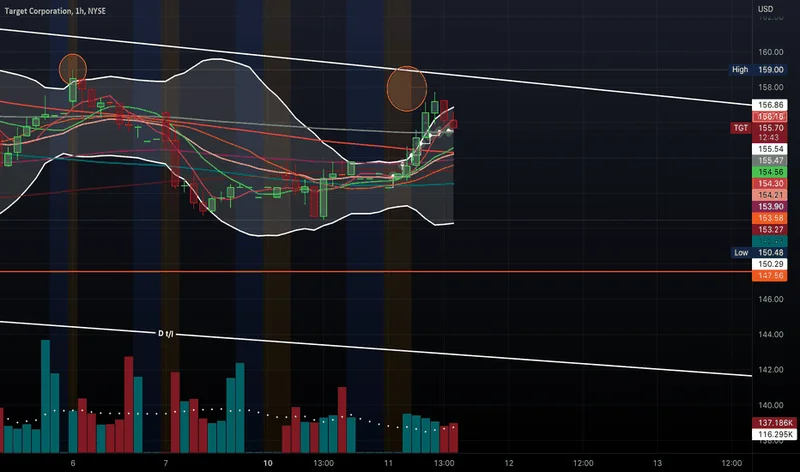
Let's not sugarcoat it. The patient is on the operating table. Net sales are down, and net earnings have plummeted a staggering 22%. The company is facing the same headwinds as everyone else—a shaky economy, tariff anxieties, and consumers clutching their wallets. The stock chart looks like a downhill ski slope. By every conventional metric, this is a company in distress.
But this is where we, as forward-thinkers, have to look deeper. The market has already processed this pain. The stock is trading at just 10 times its trailing earnings—in simpler terms, it means the price is incredibly low relative to its recent, albeit depressed, profit-making ability. This isn't a high-flying growth stock with a bubble waiting to pop; it's a distressed asset. The pessimism is baked in. It’s like a coiled spring being pushed down by the full weight of negative sentiment.
What’s fascinating to me is that this moment of maximum pressure is often the exact precursor to a paradigm shift. Systems, whether they're biological, computational, or corporate, don't evolve when things are comfortable. They evolve when they are stressed to the breaking point. This isn't just a financial downturn for Target; it's a fundamental, existential signal that the old way of doing business—the 20th-century model of a big box store—is no longer sufficient for the complexities of the 21st century. The question is no longer if it will change, but how it will be reborn.
The Catalyst for Reinvention
Come February, a new CEO, Michael Fiddelke, will take the helm. Most analysts are advising a "wait and see" approach. They want to see his strategy, his five-point plan, his PowerPoint deck. They want proof. But I believe that’s a profound misreading of where the real opportunity lies. The moment to invest in a revolution isn't after the new constitution has been written and ratified; it's when the ink is still wet on the declaration of independence.
Imagine the possibilities here. We aren't just talking about tweaking the supply chain or running better sales. We are on the cusp of what a truly integrated, data-driven, and human-centric retail experience could be, and Target, with its incredible physical footprint and brand loyalty, is one of the few companies with the scale to actually build it. What if a store becomes a third space—not just home or work, but a community hub for local makers? What if their logistics network becomes a platform for hyper-local, same-hour delivery that even Amazon can't match? The potential for AI-driven inventory management, personalized in-store experiences via augmented reality, and a subscription model that redefines customer loyalty is just staggering—it means the gap between the retailer of today and the commerce ecosystem of tomorrow is closing faster than we can even comprehend.
This is the kind of moment that reminds me of Apple in 1997. The company was on the brink of failure, its stock left for dead. The market saw only a broken hardware company. But the optimists saw the return of a visionary founder and the potential for a new blueprint. Buying Apple then wasn't a bet on the multi-colored iMacs; it was a bet on the capacity for radical change. That's what I see here. The 5.2% dividend yield isn't just a return; it's the company literally paying you to wait for the turnaround.
Of course, this kind of transformation comes with immense responsibility. A true reinvention must also consider the thousands of employees and the communities these stores serve. A visionary path forward isn't just about shareholder value; it's about creating a more resilient, more human-focused system for everyone involved. But what is the alternative? A slow, managed decline? I refuse to accept that. The potential for a brilliant, tech-infused, and community-oriented comeback is right there, waiting for a leader to unlock it. Are you going to wait until everyone else sees it, too?
Betting on the Blueprint
Look, buying Target stock today feels scary. It goes against every headline and every ounce of market momentum. But you're not buying the company that exists on paper in November 2025. You're buying a front-row seat to a potential corporate reinvention, at a price that assumes total failure. You are investing in a low-valuation, high-yield asset right at the moment a new architect is being handed the keys to the entire building. This isn't a gamble on next quarter's earnings. It's a calculated bet on the power of a new vision. It’s a bet on the blueprint that hasn’t even been drawn yet.