


The announcement that Paul Finebaum is considering a run for the U.S. Senate in Alabama presents a fascinating data point. On the surface, it fits a recognizable pattern: a well-known media or sports figure attempts to convert public notoriety into political capital. We have seen this model before with candidates like Tommy Tuberville, the very man whose seat Finebaum would seek, and Tom Osborne before him. This precedent, however, provides a flawed and incomplete framework for analyzing the Finebaum variable.
His potential candidacy is not a simple function of name recognition. To understand the viability of this political venture, one must first deconstruct the unique asset he has cultivated over a period of nearly four decades. That asset is not a win-loss record or a championship trophy; it is a proprietary, longitudinal dataset on the psyche of the Alabama electorate, gathered daily through the most unconventional of means: a sports talk radio program.
For years, The Paul Finebaum Show has operated as something far more complex than sports entertainment. Describing it as a "rage room and confessional booth" is an accurate, if anecdotal, summary of its function. It is a live, open-ended focus group where the raw, unfiltered id of a specific demographic is put on public display. Listeners do not call in to dispassionately analyze game film; they call to articulate grievance, to celebrate tribal victory, to seek validation, and to confess. The 2011 call from Harvey Updyke, in which he admitted to poisoning the historic oaks at Auburn University, was not an anomaly. It was an extreme outlier that proved the rule: Finebaum’s platform is a conduit for a level of emotional investment that transcends sport.
He has spent a career moderating and channeling this energy. He eulogizes frequent callers who pass away, reinforcing the parasocial bond between host, audience, and the collective identity they represent. This is the part of the report that I find genuinely puzzling from a purely analytical standpoint. He has managed to create a feedback loop where he is both a lightning rod for criticism and a trusted community figure, often simultaneously. This duality is a rare political commodity. His connection is not built on policy papers, but on shared outrage over a bad call in the Iron Bowl or a perceived slight from a national commentator. He has, in effect, spent 35 years A/B testing the emotional triggers of his potential voter base.
The Finebaum Variable: An Unconventional Political Equation
An Assessment of the Political Calculus
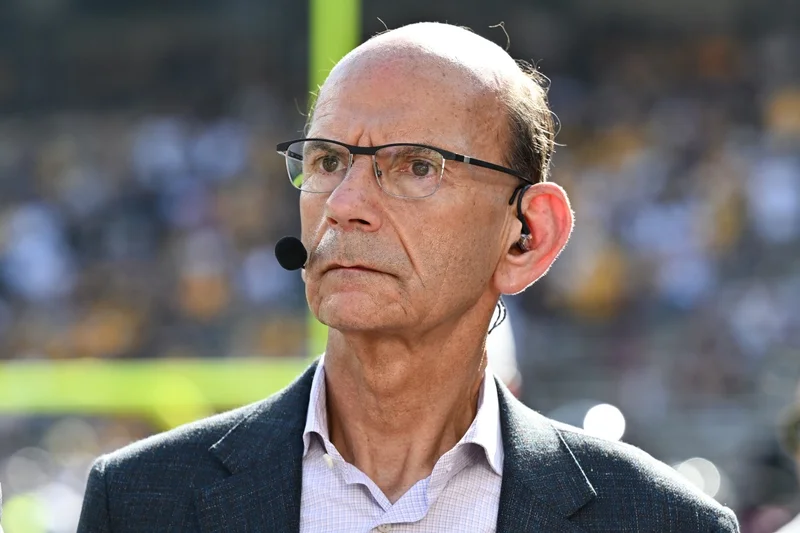
The mechanics of the potential run are straightforward. Finebaum is 70 years old. He would have to exit his lucrative role at ESPN and the SEC Network. The qualifying deadline is January 26, 2026, and he has indicated he will make a decision within a month or so—within 30 to 45 days, to be exact. He is currently registered as a Republican in North Carolina but has moved to Alabama and would re-register, making the logistics of a Paul Finebaum Alabama campaign feasible.
The catalyst for this consideration, as reported, was twofold: the assassination of political commentator Charlie Kirk and outreach from an unnamed Alabama political operative and other figures in Washington. This suggests the move is not entirely self-generated but is being actively explored by established political actors who see a viable path. They are likely looking at the same data. They see a candidate who doesn't need to be introduced to the electorate. More importantly, they see a candidate who has a pre-existing, high-engagement communication channel that bypasses traditional media.
My methodological critique, however, lies in the sampling bias of his primary data set. Are the people who call The Paul Finebaum Show representative of the median Alabama Republican voter? It's questionable. The callers represent the most passionate, the most aggrieved, and the most vocal segment of the Alabama football and broader SEC fanbase. They are, by definition, self-selecting. The core analytical challenge is determining the conversion rate: how does one translate the loyalty of a sports talk audience into reliable primary votes?
The Tuberville model offers the closest corollary. He leveraged his status as a former Auburn coach into a successful Senate campaign, demonstrating that a deep connection forged through college football is a potent political force in Alabama. Finebaum’s connection, however, is arguably broader and more nuanced. He isn't tied to just one side of the state's intense football rivalry (a significant built-in liability for any Auburn or Alabama-affiliated candidate). He is the moderator of the entire ecosystem. He is the one constant for fans of Alabama, Auburn, Georgia, and Tennessee alike. His platform is the Switzerland of SEC outrage. This cross-tribal access is his unique advantage.
His critical commentary, such as his recent statements suggesting Clemson coach Dabo Swinney should consider a new job to protect his legacy, demonstrates his willingness to voice strong, often unpopular, opinions. This is a double-edged sword. While it has built his brand as an honest broker, it has also generated a significant volume of negative sentiment from various fanbases over the years. A political campaign would immediately weaponize decades of his on-air quotes. The opposition research file would be voluminous. But Finebaum's entire career has been an exercise in managing public sentiment and controversy. He is, perhaps, uniquely inoculated against the very sort of attacks that would derail a conventional candidate.
The Sentiment Analysis Candidate
My conclusion is that this is not a vanity project. Paul Finebaum’s potential candidacy represents a stress test of a new political archetype. He is not merely a celebrity; he is the human embodiment of a sentiment analysis algorithm, trained for over three decades on a specific, high-propensity voter demographic. His entire professional life has been a qualitative study of the very people he would ask to vote for him. He understands their language, their priorities, and their pressure points not from polling data, but from thousands of hours of direct, emotional conversation. The question is not whether he is famous enough to run. The question is whether a career spent curating a "rage room" is the most effective, if unconventional, form of modern political grooming.
Reference article source: