


The phone rings in Tift County, Georgia. It’s an ordinary day, the kind that fades into the background of a life, until a voice on the other end of the line changes everything. It’s a voice cloaked in the unearned authority of a badge, a voice that claims to be the law. It speaks of warrants, of imminent arrest, of a life about to be upended. The only way out, the voice insists, is to follow instructions. Do not hang up. Do not question. Just obey.
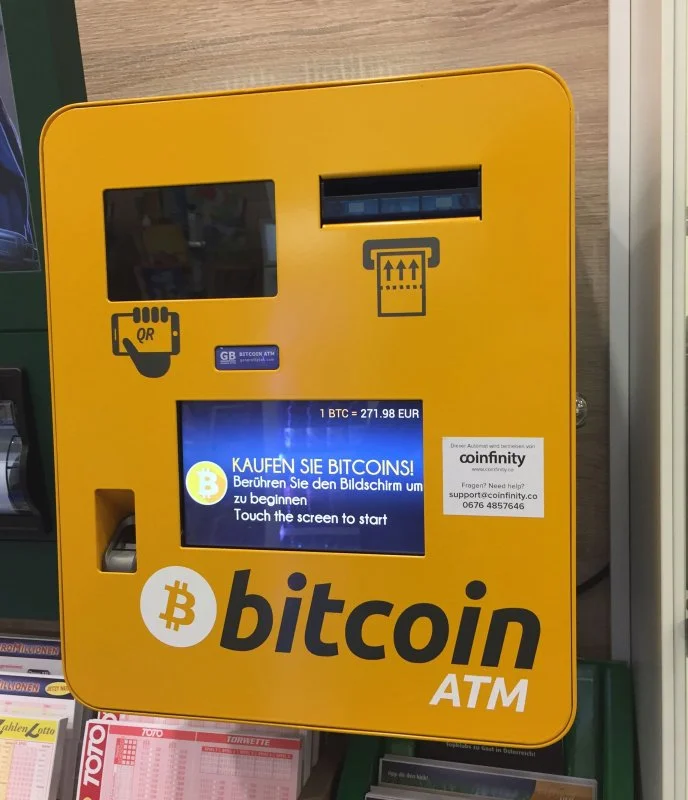
What followed was a modern tragedy, a heist conducted not with a gun, but with a ghost. A citizen, terrified and cornered by a phantom threat, was systematically drained of nearly $30,000. The escape route for the money wasn't a getaway car or an offshore account. It was a machine humming quietly in the corner of a convenience store. Three of them, in fact. Three different bitcoin ATMs.
When I read a story like this, my heart sinks. But then, my mind kicks into overdrive. Because what happened in Tift County isn't just a crime story. It’s a glimpse into the profound, often painful, friction that occurs when a revolutionary new technology collides with a world that hasn’t yet learned its language.
The headlines will focus on the scam, the lost money, the cold efficiency of the crime. They’ll point a finger at the crypto ATM, the silent accomplice. But they’re missing the point. They’re looking at the hammer and blaming it for the nail being driven into the wrong place.
The Getaway Car is Digital, But the Crime is Analog
The Ghost in the Machine is Us
Let’s be clear about what these devices are. A bitcoin machine is essentially a physical on-ramp to the decentralized digital economy—in simpler terms, it’s a portal that turns your physical cash into digital code, instantly and often irreversibly. You can walk up to a Bitcoin Depot ATM or a Coinflip Bitcoin ATM, feed it dollars, and send value across the planet in minutes. It’s a breathtaking piece of technology.
And it’s that very power that criminals exploit. Sheriff Gene Scarborough of Tift County rightly warned his citizens, stating that it’s “nearly impossible to recover money” sent this way. A cynic hears that and sees a fatal flaw. I hear it and see the raw, unfiltered power of a true peer-to-peer system. A transaction on the blockchain, once confirmed, is final. There is no central authority to appeal to, no bank manager to call to reverse the charges. This isn't a bug; it's the fundamental feature.
When I first read the details of this case, I honestly felt a knot in my stomach. Not of anger at the technology, but of profound empathy for the victim, who was manipulated by something far older and more powerful than any blockchain: fear.
The scammer didn’t hack a wallet; they hacked a human being. They exploited decades of social conditioning that taught us to respect a uniform, to fear the state, and to react with panic when threatened by authority. The scam worked because it was an old-world con dressed in new-world clothing. The threat was analog, but the getaway vehicle was digital. This isn't just about one person losing money, it's a signal flare from the future telling us that the very nature of trust and authority is being rewritten in real-time and we need to catch up because the gap between the speed of innovation and the speed of our societal adaptation is widening every single second.
Think about the dawn of the internet. Remember those emails from a foreign prince who just needed your bank account details to transfer his vast fortune? We all laugh now, but people lost millions. Did we shut down email? Did we declare the internet a failed experiment?
Of course not. We adapted. We developed a new form of literacy. We learned to spot the fake links, to question the urgent requests, to build spam filters and firewalls. We built a collective immune system.
That is precisely where we are now with the world of decentralized finance. We are at the dawn of a new economic internet, and the “princes” are back, this time wearing the digital masks of sheriffs and federal agents. The painful lesson from Tift County isn't that Bitcoin is dangerous; it's that our old-world security protocols are obsolete. The most important firewall we need to build now isn't on our computers. It’s in our minds.
What does this new world ask of us? It asks for a healthy skepticism of centralized authority, especially when it demands immediate, irreversible action. It asks us to understand that a tool that can empower the unbanked in one country can be used to disempower the fearful in another. It’s the same challenge humanity has always faced, from the printing press to the atomic bomb: our wisdom must evolve as quickly as our tools.
The Tift County Sheriff’s Office asks citizens to call 911 if they feel they’re being scammed. This is the crucial step. It’s about re-engaging the legitimate, community-based systems of trust to verify the claims of the digital ghosts. It’s about using the old network to protect ourselves as we learn to navigate the new one.
So, when you see a bitcoin ATM near me or search for bitcoin atm locations, don’t see a villain. See a tool. A powerful, neutral, and revolutionary tool that is forcing us—sometimes painfully—to become smarter, more vigilant, and more discerning inhabitants of the 21st century. This is not a technological failure. It's a human final exam.
The Future Demands a New Firewall
The greatest vulnerability in any system is always the human element. The events in Tift County are a tragic reminder that the most sophisticated encryption and decentralized ledgers in the world are meaningless if someone can be scared into willingly bypassing them. The answer isn't to fear the machine or retreat from the frontier. The answer is to upgrade the operator. We must build the human firewall, brick by brick, through education, skepticism, and a renewed sense of community vigilance. The future isn't coming for our passwords; it's coming for our instincts. We have to be ready.
Reference article source: