


The release of a four-episode animated series on a streaming platform is not typically an event that warrants significant market analysis. Yet, the performance of Marvel’s Marvel Zombies presents a fascinating case study in corporate strategy and consumer response. In the context of the Marvel Cinematic Universe’s well-documented phase of diminishing returns, this niche horror spinoff has registered as a notable success, both in terms of audience engagement metrics and critical reception.
The prevailing corporate narrative, echoed in industry-insider reports, is that this success is not an accident, but a calculated move. The evidence cited is a key scene in the first episode. Amidst the apocalyptic chaos, the character Ikaris—from the 2021 film Eternals—appears in a silent, protracted battle with a zombified Captain Marvel. This cameo is framed as a strategic effort to rehabilitate the Eternals intellectual property. That film, despite its high-profile director and cast, was a significant outlier in the MCU’s financial and critical track record (it was the first MCU film to receive a "rotten" rating on Rotten Tomatoes). The logic appears to be that by reintroducing these characters in a popular, lower-cost animated format, Marvel can maintain brand awareness and slowly rebuild audience affinity, paving the way for a future, higher-stakes return to live-action.
On the surface, this is a plausible, if conservative, strategy for managing underperforming assets within a portfolio. It’s a low-risk method for keeping dormant IP on life support. However, a deeper look at the data suggests this interpretation may be fundamentally flawed.
Using New Data to Justify an Old Mistake
A Contradiction in the Core Data
The central problem with the "Eternals rehabilitation" thesis is that it ignores the primary variable driving the success of Marvel Zombies: its deliberate and total separation from the continuity it is supposedly meant to service. Audience and critical feedback do not celebrate the show for its clever integration of forgotten characters. Instead, the praise is overwhelmingly directed at its freedom. Free from nearly two decades of narrative baggage, the creators were able to tell a self-contained, high-stakes story with a definitive tone and conclusion.
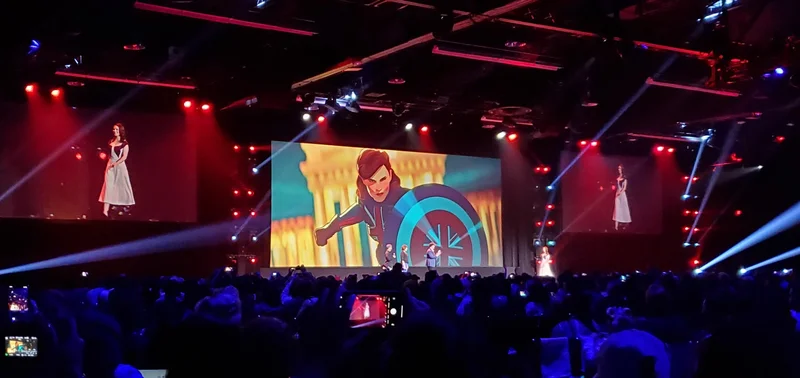
This is the core discrepancy. The studio appears to view the show's success as a validation of its interconnected universe, interpreting it as proof that even failed components like Eternals have residual value. But the market is rewarding the show for behaving as if that universe doesn't exist. The inclusion of Ikaris isn't the reason the show works; the show works in spite of the strategic baggage his inclusion represents.
I've looked at hundreds of corporate turnaround strategies, and using a successful, low-cost product line to justify a past high-cost failure is a classic red flag. It often indicates a management team more committed to validating past decisions than to interpreting new data correctly. The data from Zombies doesn't suggest audiences are warming up to the idea of an Eternals 2. It suggests they are starved for focused, standalone stories that don't require homework.
This pattern isn't new; it’s visible across the history of the Marvel cinematic properties. The brand’s most significant successes were almost always products of deviation, not conformity. Iron Man in 2008 was a gamble on a B-list character that succeeded by establishing a witty, personality-driven tone distinct from its superhero predecessors. Guardians of the Galaxy took an even greater risk on a set of complete unknowns, becoming a blockbuster by leaning into a unique comedic and musical sensibility. More recently, Spider-Man: Into the Spider-Verse demonstrated conclusively that an animated feature, completely untethered from the live-action canon, could outperform its counterparts both critically and creatively. It didn't serve the MCU; it built its own universe and was rewarded for it.
Each of these films represents a data point proving that creative and financial success correlates more strongly with unique vision and narrative integrity than with slavish adherence to a master plot. It has now been about four years—to be more exact, nearly four years—since Eternals was released. The attempt to use a successful, continuity-free project to retroactively justify that initial investment looks less like a shrewd long-term plan and more like a manifestation of the sunk-cost fallacy. The studio is misinterpreting a demand for something new as a demand for more of the old.
The market signal is unambiguous. Viewers are not responding to Marvel Zombies because it dutifully services the larger machine. They are responding because it has been uncoupled from the machine. The show’s popularity is a vote of no-confidence in the very strategy of interconnectedness it is supposedly designed to support.
The Sunk Cost Variable
The primary value of Marvel Zombies to Disney is not as a promotional tool for the Eternals. Its true value is as a clean dataset demonstrating that the company's core strategic pillar—a single, all-consuming continuity—has become a liability. The market is rewarding divergence. To interpret this success as a mandate to spend more resources shoring up the weakest parts of the old model is a fundamental error in analysis. The data does not suggest a course correction; it suggests the need for a new portfolio entirely.
Reference article source: