


More Than Corn: A Virginia Farm's Closure is a Warning About Our Social Operating System
Imagine a living, breathing algorithm designed for pure, analog joy. A system so complex it can only be navigated by walking, getting lost, and laughing with your family. For 16 years, that system was the Liberty Mills Farm corn maze in Virginia, one of the most celebrated in the nation. It was a masterpiece of agricultural engineering, sure, but its true function was human connection. It was a place you went to disconnect from the digital world and reconnect with something real.
And now, that system has crashed.
The farm’s owners, Kent and Evie Woods, ages 70 and 63, abruptly shut it all down. Not because of a bad harvest, a financial crisis, or a natural disaster. They closed because of a system failure of a different kind—a human one. In a heartbreakingly candid post, they announced they were closing for the season, and maybe for good, after a confrontation where they were allegedly threatened with violence, sworn at, and accused of racism.
When I first read their statement, I honestly just felt a pit in my stomach. This isn't just a local news story about a pumpkin patch. This is a canary in the coal mine. The Woods wrote, “The anger directed towards our family and staff, the loss of sleep and continuous stress are not worth continuing operations. We will no longer accept the venom that is directed at us personally.”
This is the kind of breakdown that reminds me why the work we do in building better systems is so critical. But it also reveals a terrifying blind spot. We spend trillions designing flawless code and resilient networks, but we’re forgetting to maintain the most important operating system of all: our social contract. What does it mean for our future when a place built for creating happy memories is shuttered because the public forgot how to behave in public? How did we get to a point where a family that spent 16 years cultivating joy for others decides the personal cost is just too high?
A Denial-of-Service Attack on the Human Spirit
In the world of technology, a Denial-of-Service (DoS) attack is when you overwhelm a server with so much junk traffic that it can no longer perform its intended function. It just shuts down.
What happened to Kent and Evie Woods was a DoS attack on the human spirit.
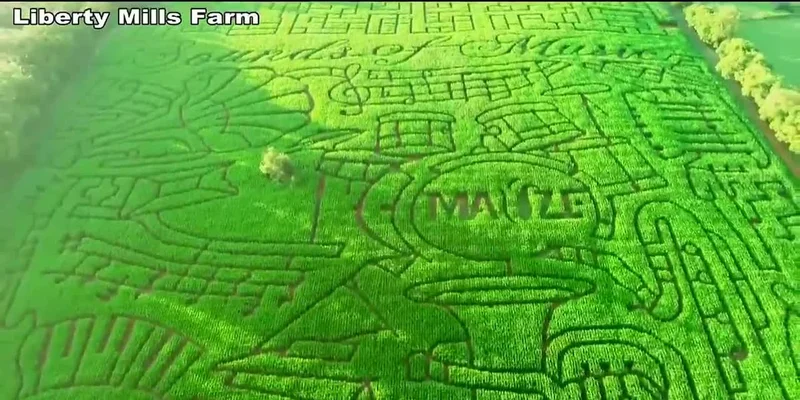
It wasn’t just the one explosive incident. In their own words, it was the slow, grinding erosion from a thousand little aggressions—the intoxicated college kids crashing through the corn for fun, the arguments over closing times, the constant, low-level friction of people who have forgotten they are guests in someone else’s dream. The final confrontation was just the packet that finally crashed the server.
This is a uniquely modern tragedy. The farm is an analog business, but the conflict feels like it was born online. It’s the real-world manifestation of the outrage culture we see on social media, where context is irrelevant, nuance is a weakness, and the goal isn't resolution but domination. A phone shoved in someone’s face isn’t a tool for communication; it’s a weapon of intimidation, a threat to broadcast a one-sided narrative to a digital mob.
Think about the farm as a platform. For 16 years, its purpose was to generate positive user experiences: hayrides, pumpkin picking, the simple thrill of finding your way out of a maze. The vast majority of visitors, like Pat Owen who took his grandkids, had a wonderful time. But it only takes a few malicious actors to poison the well for everyone. This is the fundamental vulnerability of any open system, whether it’s a website or a field of corn. It relies on the goodwill of its users. Is that goodwill now a resource we can no longer count on?
We're Forgetting How to Share Our Spaces
What was lost here wasn’t just a corn maze; it was a piece of shared public infrastructure. Not the kind made of concrete and steel, but the kind made of memories and community trust. This is like the 21st-century version of the enclosure of the commons, where shared lands were fenced off for private use. Except now, our shared spaces aren't being lost to fences; they’re being lost to behavior so toxic that no one wants to host them anymore.
The entire enterprise was built on an unspoken social contract—in simpler terms, it’s the basic, unwritten agreement that we’ll all be decent to each other so we can have nice things. That contract was breached. And when the contract is breached, the system fails.
The Woods weren’t running a faceless corporation. They were a couple who made a career change late in life, not for the money, but "for the enjoyment of others and to create memories that will last a lifetime." They are the very definition of the passion economy. But passion is a finite resource. It can’t survive a sustained barrage of hostility. The heartbreaking line in their letter says it all: "The bottom line is we are no longer having fun at what we are doing."
This is the real-world cost of our fraying social fabric. It's not an abstract political debate. It's an empty pumpkin patch in Virginia. It’s the silence where the sound of children's laughter should be. The question now is whether this is a temporary shutdown or a permanent deletion. The Woods say they’ll decide over the winter if they will reopen in 2026. Their decision isn't just about their farm. It’s a referendum on us. Can we debug our own behavior and restore the code of basic human decency? Or are we content to watch more of these beautiful, analog networks go offline, one by one?
This Isn't a Bug, It's a Feature of Our Current Culture
What happened at Liberty Mills Farm isn't an anomaly. It's the logical conclusion of a society that has fetishized individual grievance over collective well-being. We’ve replaced community with consumerism, and the result is that people show up to a family farm and behave like they’re leaving a one-star review on an app—impersonal, demanding, and utterly devoid of grace. The most profound and terrifying part of this whole affair is that the farm didn't fail. We did. The question isn't whether the Woods will find the strength to reopen; it's whether we will find the collective character to deserve it.