


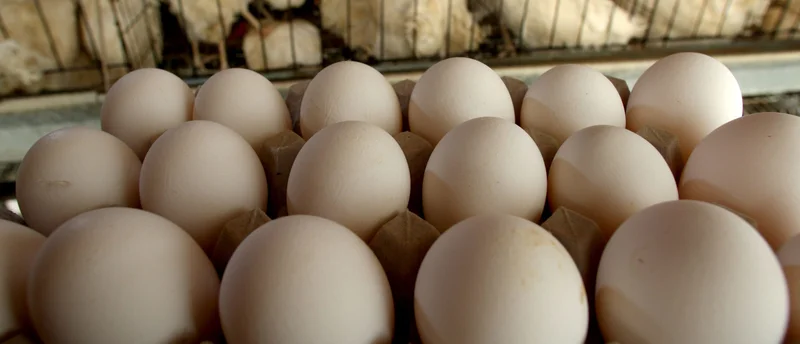
That carton of eggs in your fridge. Go ahead, picture it. You probably bought it without a second thought, grabbing it from the refrigerated aisle as part of a routine that’s as old as the supermarket itself. But right now, for millions of Americans, that simple carton represents a startling glitch in the system—a system we implicitly trust with our health every single day.
The news hit like a cold shock: Over 6 million eggs recalled for salmonella risk. See which brands. The names—Black Sheep Egg Company, Kenz Henz—suddenly thrust into the national spotlight for the worst possible reason. The culprit? Salmonella. Not just a trace, either. FDA testing at a single facility in Arkansas uncovered a staggering 40 environmental samples teeming with seven different strains of the bacteria.
When I first saw that detail, the "seven different strains," I honestly just sat back in my chair, speechless. This isn't a case of one bad batch or a momentary lapse in protocol. This is a catastrophic, systemic failure. It’s a blaring alarm bell from a system that is fundamentally broken, a relic of a pre-digital age struggling to keep up with the speed and scale of modern life.
We’re living in an era of breathtaking technological acceleration, yet our food supply chain often feels like it’s running on analog parts. It’s a black box. An egg can be laid on a farm, sent to a processing facility, repackaged, rebranded, and shipped across five states before a single consumer cracks it into a pan. By the time a problem is detected, the potential damage has already spread like a virus through the network. The current recall, spanning from California to Texas to Missouri, is a perfect, terrifying example. We’re left with vague warnings: "throw away any eggs without original packaging." It’s the equivalent of telling someone to avoid a specific street after a dozen accidents have already happened. Why are we still reacting instead of preventing? In an age where I can track a package from a warehouse in Shenzhen to my front door in real-time, how can we lose track of the food we put inside our bodies?
The Anatomy of a Blind System
Let’s be clear: this isn’t about blaming a single company. This is about the architecture of the system itself. The current food supply chain is like an old library that uses a physical card catalog. Every time a book—or in this case, a carton of eggs—moves, someone is supposed to manually update a card. But if a card gets lost, smudged, or put in the wrong drawer, the information is gone. The trail goes cold.
That’s what’s happening here. The FDA is doing its best to trace the fallout, but the potential for these eggs to have been repackaged or sold to wholesalers who then distribute them further creates a chaotic ripple effect. It’s a detective story where all the clues are days, if not weeks, old. The fact that, as of now, no illnesses have been officially linked to the Kenz Henz recall is frankly a matter of sheer luck, not a testament to the system's resilience. We’re rolling the dice with every meal.
The human cost of this gamble is real. Salmonella isn’t just a 24-hour bug for everyone. For the very young, the elderly, or those with compromised immune systems, it can be a brutal, even fatal, illness. The CDC reports that Salmonella causes about 420 deaths in the U.S. annually. These aren't just statistics; they are grandparents, children, and neighbors. So, what’s the answer? Do we just accept these recalls as a cost of doing business? A routine hazard of modern eating?
Absolutely not. Because the technology to build a better, smarter, and radically transparent system doesn’t just exist in theory—it’s already here. We’re standing on the precipice of a revolution in food safety, and this recall might just be the push we need to finally take the leap.
The Dawn of the Digital Plate
Imagine a different world. You pick up a carton of eggs. You scan a QR code on the side with your phone. Instantly, you see the farm it came from in Arkansas. You see the date the eggs were laid, the batch number, and the results of the facility’s latest safety inspection. You see the temperature logs from the truck that transported them to your state. This entire, unbroken chain of data is stored on a blockchain—in simpler terms, it’s a permanent, un-hackable digital receipt that’s shared by the farmer, the distributor, and the grocery store.
In this world, if a facility like the one in Walnut Ridge flags a positive Salmonella test, the response isn’t a panicked, sweeping recall days later. Instead, an AI monitoring the network can instantly identify every single affected carton, down to the specific shelf in a specific store, and trigger a targeted alert in minutes. The recall shrinks from six million eggs to perhaps just a few thousand, and it happens before a single contaminated product is sold.
This isn't science fiction. This is the application of blockchain, IoT (Internet of Things) sensors, and AI to one of our oldest industries. It's about creating a digital nervous system for our food supply. This kind of change is as fundamental as the invention of refrigeration or pasteurization—it’s a paradigm shift that moves us from a reactive model of damage control to a proactive model of guaranteed safety. And the speed at which this could be implemented is just staggering—it means the gap between the broken system of today and the transparent system of tomorrow is a matter of will, not technology.
Of course, this transformation comes with its own set of crucial questions. How do we ensure these tools empower small, independent farmers instead of just becoming another barrier to entry? What are the data privacy implications? We have a responsibility to build this new system ethically and equitably. But these are challenges to be engineered, not excuses for inaction. The alternative is to keep accepting these massive, dangerous recalls as normal. To keep telling people to just throw their food away and hope for the best.
This Isn't About Eggs Anymore
This recall is a painful, urgent reminder that our food system is built on a foundation of blind trust. We trust that the food we buy is safe, but we have almost no way to verify it. That era is ending. The technology to replace blind trust with verifiable truth is in our hands. This is about more than just preventing the next Salmonella outbreak; it's about fundamentally rewiring our relationship with the food we eat. It’s about building a future where every meal comes with a story we can see, a journey we can trust, and a promise of safety that is proven, not just assumed. We have the tools. It's time to build.