


Friends, something is happening. It’s not happening in a flashy press conference or a hyped-up product launch. It’s happening in regulatory filings, in partnership announcements, and in the quiet, monumental planning documents of the organizations that power our world. We are witnessing the birth of the next energy paradigm, and it’s being built on a foundation of atoms.
For decades, nuclear power has been the giant in the room—immensely powerful, but monolithic, expensive, and slow to build. It was the mainframe computer of energy: a centralized behemoth that only a few could manage. But the last few months have felt different. It feels like the landscape is shifting under our feet.
In September, NuScale Power, a company that has been toiling away at this for years, announced it was backing a plan with the Tennessee Valley Authority (TVA) to deploy up to six gigawatts of its small modular reactor (SMR) technology. Let that sink in. This isn't a pilot program or a demonstration; it's the largest SMR initiative in U.S. history, a signal that a major utility is ready to go all-in. At the same time, legacy giant GE Vernova and Samsung C&T are joining forces to push their own SMR design, the BWRX-300, onto the global stage.
When I first saw the TVA announcement, I honestly just sat back in my chair, speechless. This is the kind of breakthrough that reminds me why I got into this field in the first place. This isn't just about building smaller power plants; it's about fundamentally changing our relationship with energy.
The Dawn of Distributed Power
So, what exactly is an SMR? Think of it this way. Instead of building one colossal, gigawatt-scale nuclear plant over a decade, you manufacture smaller, standardized reactors—Small Modular Reactors—in a factory and assemble them on-site. It’s the difference between building a custom skyscraper from scratch and assembling a high-tech, prefabricated structure. This approach promises to make nuclear power cheaper, faster to deploy, and safer, with designs that can cool themselves down without human intervention.
This is the paradigm shift. We’re moving from the mainframe to the personal computer. We're decentralizing clean energy production. Imagine a fleet of these SMRs powering a massive new semiconductor fab, or a cluster of them providing the insane amount of electricity needed for a next-generation AI data center—all without emitting a single puff of carbon. That’s precisely what the TVA is planning for, and the U.S. Nuclear Regulatory Commission has already accepted their application to build the first one at the Clinch River site.
This isn't a far-off dream anymore, it’s a blueprint being drawn up right now, and the speed of this is just staggering—it means the gap between the carbon-intensive grid of today and the clean, abundant energy grid of tomorrow is closing faster than we can even comprehend. But with this incredible power comes an equally incredible responsibility. We have to get this right, ensuring that safety, security, and public trust are built into the foundation of every single project. What kind of world could we build if we had a virtually limitless supply of clean, reliable, 24/7 power? What industries could be born?
Wall Street Is Using the Wrong Map
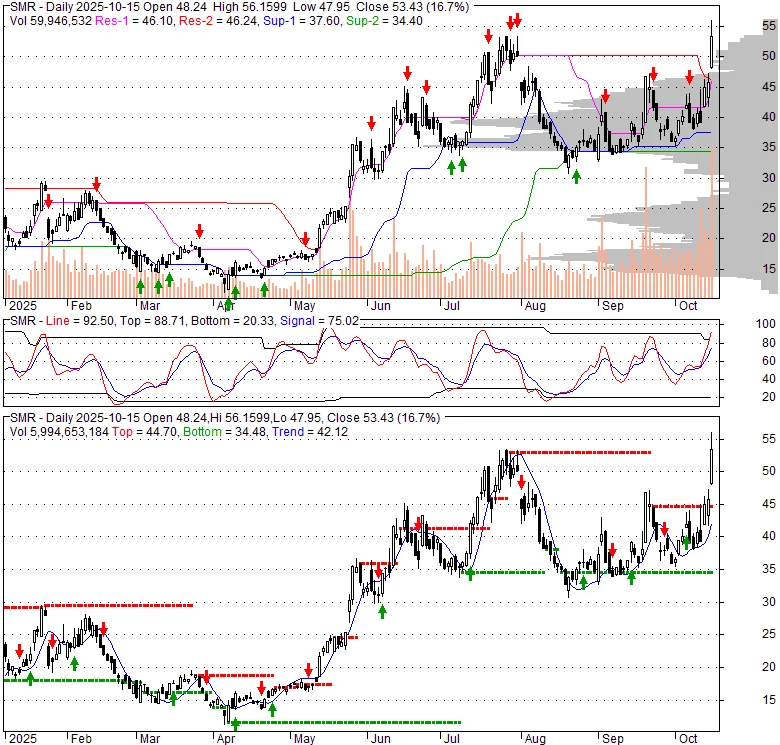
Naturally, whenever a truly disruptive technology emerges, the old guard gets confused. Look at the stock market's reaction. NuScale Power (SMR) has skyrocketed 151% this year, while GE Vernova (GEV) is up 97%. The market sees the potential. Yet, if you turn to traditional analysts, you see a disconnect as they debate NuScale Power vs. GE Vernova: Which Nuclear Energy Stock Has an Edge?.
Zacks Investment Research gives NuScale a "Hold" and GE Vernova a "Sell." Both are slapped with a "Value Score of F," labeling them as overvalued. They point to NuScale’s projected loss of 46 cents per share for 2025 and its astronomical Price-to-Sales ratio of 93.71x. On the surface, it looks like a bubble.
But this is where I believe they are fundamentally misreading the moment. Judging a company like NuScale on its current sales is like judging the value of the internet in 1995 based on the number of dial-up subscribers. It completely misses the S-curve of adoption that’s about to hit. You're not investing in a company that sells widgets; you're investing in the company that has the only NRC-approved SMR design in the United States, effectively holding a golden ticket to a market projected to be worth over $8 billion by 2032.
This is a bet on infrastructure. It’s a bet on the picks and shovels for the AI gold rush. GE Vernova, despite its own challenges in other divisions, understands this, which is why they’re racing to get their BWRX-300 to market. While they are projected to be profitable, their path is different—leveraging a massive industrial base to compete. So who is right? The pure-play pioneer or the diversified titan? Does it even matter when the tidal wave of demand is about to lift all boats?
We're Building the Engine of Tomorrow
Look, the numbers and the analyst ratings tell one story: a story of risk, of overvaluation, of quarterly earnings. But they miss the bigger, more human story. We stand at a precipice. Behind us is a world constrained by intermittent energy and carbon emissions. In front of us is the potential for a world of energy abundance, one capable of powering the greatest technological expansions in human history—from artificial intelligence to re-industrialization. The SMR isn't just another power source. It's the missing piece. It's the engine that will drive the 21st century. And it’s finally being switched on.