


The Market is Mispricing Uber's Real Product
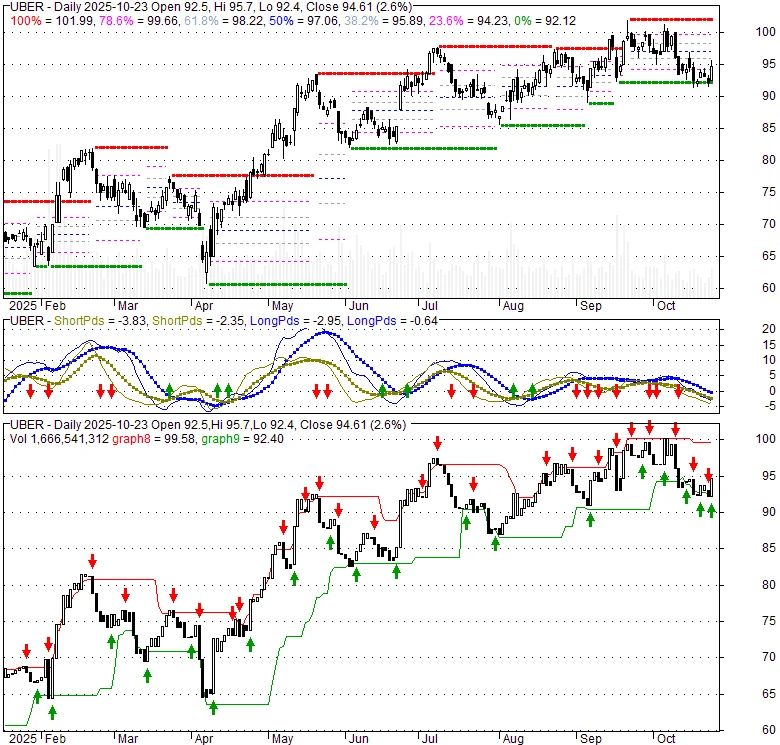
The common narrative around Uber is simple, and frankly, a little lazy. It’s a ride-hailing and food delivery giant, a post-internet taxi company that won the logistics war. The numbers certainly back this up. A 174% surge in share price over the last five years, easily outpacing the S&P 500, tells a story of market dominance. With gross bookings up 17% and revenue up 18% in the last reported quarter, the engine is clearly still humming.
But to evaluate Uber on these metrics alone is to analyze an iceberg by measuring only the part you can see. The market is pricing a transportation company. I believe it’s failing to properly value a data and network logistics powerhouse that is only just beginning to monetize its most valuable asset. The recent 8% dip from its peak isn't a sign of weakness; it’s a market miscalculation, presenting an entry point for those who understand what Uber is actually building.
The company’s competitive moat isn’t its app or its brand name, though both are formidable. It’s the network effect—a concept so often cited it’s become a cliché, but in Uber’s case, it’s a fortress. With a massive user base (currently sitting at 180 million monthly active users), every new rider makes the platform more valuable for drivers, and every new driver reduces wait times for riders. It’s a self-perpetuating cycle of efficiency that is brutally difficult for a competitor, like Lyft, to replicate at scale. You can almost hear the low hum of servers processing petabytes of trip data, optimizing routes, and predicting demand in a way no legacy taxi service ever could.
This is where I find the current analysis of the `uber stock price` to be fundamentally incomplete. Pundits focus on trip frequency, pointing out that 50% of users only book a ride once or twice a month. They see this as a problem of engagement. I see it as untapped potential for a company that is quietly building a new, far more lucrative business on top of its existing infrastructure: advertising. The reported $1.5 billion in annualized ad sales isn’t a side project; it’s the blueprint for the future. Uber knows where you are, where you’re going, and what you order. What is that data worth to a local restaurant, a national retailer, or a movie studio?
The Inevitable Pivot from Cars to Code
The biggest existential threat—and greatest opportunity—looming over Uber is the rise of autonomous vehicles (AVs). The fear is that a company like Tesla or Waymo could launch its own ride-hailing network, undercut prices, and render Uber’s army of human drivers obsolete. This is a surface-level risk assessment. The reality is far more nuanced and, for Uber, far more promising.
Uber isn't a car company; it’s an air traffic controller for the ground. An air traffic controller doesn't care who builds the planes—Boeing or Airbus—it only cares about managing the routes, the passengers, and the airspace. Uber is positioning itself to be the indispensable operating system for autonomous mobility, regardless of who manufactures the hardware. Its partnerships with AV developers aren't defensive maneuvers; they are strategic integrations. Why would Waymo spend billions trying to build a customer-facing app and network from scratch when it can plug directly into Uber’s 180 million users?
This brings us to the most telling, and least-discussed, data point: the quiet partnership with NVIDIA. Details on the arrangement are scarce, but the headline alone—NVIDIA using Uber driving data to further autonomous driving models (UBER:NYSE)—is a strategic flare in the night sky. The value isn't in the cars; it's in the trillions of data points from billions of real-world miles driven. What is that data worth to a company like `nvidia`, which is desperate for real-world edge cases to train its AI? Is this a one-off deal, or the beginning of a new, high-margin data-licensing vertical that Wall Street has yet to model? The market obsesses over the `nvda stock` price as a chip play, but the underlying asset is data. Uber is sitting on one of a kind.
The financial projections reflect this underlying strength, even if they don't fully capture the data story. Wall Street’s consensus estimates call for earnings per share to rise by over 50%—to be more exact, 52% between 2025 and 2027. Paired with a forward price-to-earnings ratio of 23.2, the stock appears attractive even by conventional metrics. But these numbers are based on the Uber of today. They don't account for a future where Uber’s highest-margin product isn't a ride, but a data packet sold to an AV developer or an advertiser.
A Bet on the Network, Not the Fleet
Ultimately, an investment in Uber today isn’t a bet on the future of ride-sharing. That war has been won. It’s a bet on the value of a closed-loop logistics network in a world that is becoming increasingly automated. The conversation shouldn't be about whether the `uber stock price` can outperform the `tesla stock price`. They aren't even competing in the same event. Tesla is building the car; Uber is building the system that will tell all the cars where to go. My analysis suggests the market is still pricing the vehicle and has not yet woken up to the immense value of the control tower.