

The Market Is Having a Panic Attack. I’m Watching Them Build a New World.
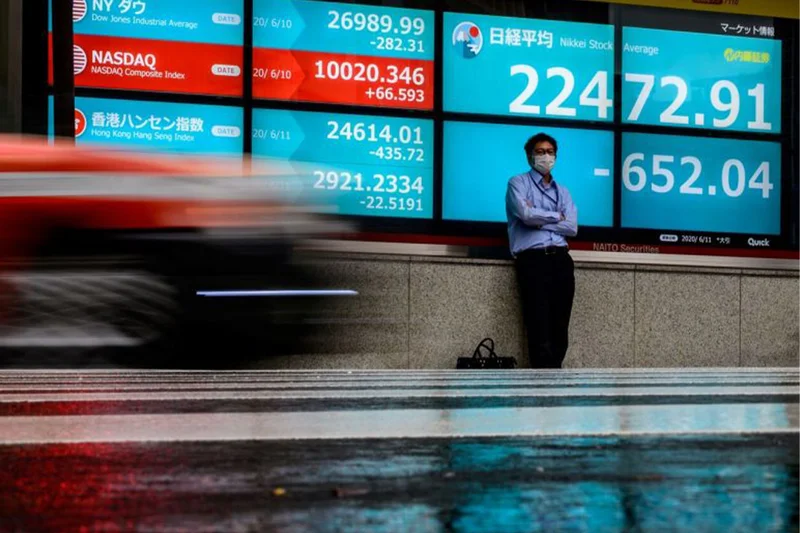
The market coughed and sputtered on Tuesday, and everyone rushed to check the patient’s temperature. The Nasdaq was down, trade war rhetoric was escalating over soybeans and cooking oil—yes, you read that right—and the usual chorus of pundits was wringing their hands over volatility. JPMorgan’s CEO Jamie Dimon was on the wires talking about "cockroaches" in the subprime auto loan market.
Amid this cacophony of fear, I saw a headline that made me laugh out loud. A Bank of America survey found that a record 54% of global fund managers believe artificial intelligence stocks are in a bubble.
A bubble.
It’s the perfect word for people who can only see the surface, the thin, shimmering film of a stock price, without understanding the colossal industrial revolution taking shape underneath. They see a single day’s 4% drop in Nvidia and get spooked. They don’t see the AMD deal to supply Oracle with 50,000 AI chips. They don’t see Intel racing to get its new GPU to market. They’re fixated on the ripples, completely missing the tectonic plates shifting beneath their feet.
What’s happening in AI right now isn’t a bubble. It’s the pouring of a foundation. It’s the frantic, messy, and unbelievably expensive construction of a new utility for humankind, one as fundamental as the electrical grid or the internet itself. And while Wall Street is distracted by presidential tweets, the builders are hard at work.
The Trillion-Dollar Scaffolding
Let’s talk about the numbers for a second, because they are staggering. Forget the daily stock tickers. Look at the capital expenditure. Citi analysts estimate that OpenAI, just one company, is on a path that represents a cumulative 1.3 trillion dollars in infrastructure spending by 2030. When I read that analysis, I honestly just sat back in my chair, speechless. This isn't a software update. This is planetary-scale engineering.
We're talking about building out 26 gigawatts of computing capacity for OpenAI alone—in simpler terms, that's like building the power infrastructure for entire countries, but dedicating it all to pure intelligence. This is the kind of breakthrough that reminds me why I got into this field in the first place. This isn't some speculative digital token or a social media app. This is the heavy-duty, world-changing machinery of the future being assembled, piece by piece, right now.
Think of it like this: the market’s current obsession with AI stock prices is like judging the importance of the transcontinental railroad by the daily price fluctuations of a single steel mill in Pittsburgh in 1865. It completely misses the point. The real story isn't the price of steel; it's the fact that they are physically laying thousands of miles of track that will connect a continent and redefine an economy for a century. The AMD-Oracle deal isn’t just a sale; it’s another 50,000 railroad ties being hammered into the ground.
And we’re already seeing the first trains leave the station. Walmart’s partnership with OpenAI to create a ChatGPT shopping experience is a perfect, tangible example. This isn’t some far-off sci-fi concept. This is the world’s largest retailer fundamentally rewiring its connection with you, the customer, using this new utility. And this is just the beginning—imagine this level of intelligence integrated into medicine, into scientific discovery, into education, the sheer potential for human progress is so vast it’s almost difficult to fully grasp the scale of the paradigm shift we are living through right now.
Of course, with this kind of power comes immense responsibility. We have to ask ourselves: who owns this new grid? How do we ensure it serves all of humanity, not just a handful of corporations? These are the real questions we should be debating, not whether Nvidia’s stock is overvalued on a Tuesday afternoon.
The debate over an "AI bubble" is a failure of imagination. You can't call the construction of the Hoover Dam a "concrete bubble." It was a monumental investment in the future, and what’s happening in data centers across the globe is no different. It’s loud, it’s expensive, and from the outside, it looks like chaos. But it’s not a bubble. It’s the scaffolding of tomorrow.
The Real Story Isn't the Price, It's the Purpose
So let the traders panic over oil futures and port fees. Let the fund managers fret about their quarterly returns. They are standing on the shore, complaining about the tide, while a new continent rises from the sea just beyond the horizon.
The real signal isn’t in the Dow Jones Industrial Average; it’s in the quiet hum of tens of thousands of new GPUs spinning up in a data center in Ohio. It’s in the code being written by a team in San Francisco that will allow a doctor in rural India to access world-class diagnostic tools. It’s in the potential for a technology that can help us solve problems we once considered insurmountable—from climate change to disease.
What does this future look like for you? It means a world that is more personalized, more efficient, and more creative. It means having a tireless assistant to help you learn a new skill, a brilliant collaborator to help you launch a business, and a network of intelligence that can augment human potential in ways we are only just beginning to imagine. Are you ready for that? Are we, as a society, prepared to guide it?
The day’s market noise will be forgotten by next week. But the infrastructure being built today will define the next fifty years. Don’t watch the stock tickers. Watch the builders. They’re the ones showing you where the world is truly going.