


So, the tech-bro-sphere and Wall Street have a new shiny object for you: quantum computing stocks. I’ve seen a dozen headlines this week, like 3 Quantum Computing Stocks That Could Make a Millionaire, screaming about how IonQ (IONQ), Rigetti (RGTI), or D-Wave (QBTS) is the "next Nvidia," ready to turn your lunch money into a cool million bucks.
Let's be real. Calling any of these cash-burning science experiments the "next Nvidia" is like pointing to a kid with a chemistry set in his garage and calling him the next Nobel laureate. It’s a fantasy sold to people who don’t understand the difference between a press release and a profitable business.
This whole thing is a joke. No, a 'joke' is funny—this is just a tragedy waiting for an audience. They dangle the story of a $10,000 investment in NVDA turning into $3 million, and everyone’s eyes glaze over. They start dreaming of yachts and early retirement. What they conveniently forget is that a decade ago, Nvidia was already a real, profitable company selling millions of graphics cards to gamers. They had a rock-solid business to fall back on.
These quantum outfits? Their business model is basically "trust us, bro." They're running on venture capital fumes and hype, with operating losses that would make a small country blush. IonQ lost $181 million in a single quarter. You’re not buying a piece of a business; you’re buying a lottery ticket for a drawing that might not happen for another ten years, if ever.
The Dumbest Horse Race in History
To make you a millionaire off a $10,0.00 investment, these stocks need to 100x. The math on that is just… insane. That would make IonQ a $1.8 trillion company. That’s bigger than almost every company on Earth right now. For a business whose primary product is still deep in the R&D phase? Give me a break.
The financial gurus tell you to just "spread your money across all three" to mitigate risk. That’s not an investment strategy; that's just betting on every horse in a race where most of the horses might spontaneously combust before they leave the gate.
You’ve got three main contenders, each with a completely different idea of how to build this magical computing box.
IonQ is using "trapped-ion" technology. They claim it's more accurate and can run at room temperature, which sounds great until you realize it’s still years away from doing anything truly useful. Think of them as the team trying to build a warp drive with meticulously polished crystals. It’s elegant, but is it going anywhere fast?
Then there’s Rigetti, using the more common "superconducting" method. This is what the big boys like IBM are using. It's supposedly faster, but you have to cool the damn thing down to a temperature colder than deep space. This is the brute-force approach—build a bigger, colder engine and hope for the best.
And finally, you have D-Wave. These guys aren't even playing the same game. They’re building an "annealer," which is a hyper-specialized machine for optimization problems. Critics, some of them pretty damn smart, have called it a technological "dead-end" for universal computing. But here’s the kicker: it’s the only one with any real-world traction. They helped a police force in the UK optimize vehicle routes, a project detailed in the D-Wave Quantum (QBTS) and North Wales Police (NWP) Announce Completion of Joint Proof-of-technology Project. So the "dead-end" is actually solving problems, while the "real" quantum computers are still stuck in the lab. What are we even supposed to make of that? They talk about 'decoherence' and 'qubits' like we're all supposed to nod along, and honestly...
This reminds me of the early days of the internet, when everyone promised a utopian future and all we got were targeted ads and social media rage-bait. The quantum promise is to cure diseases and solve climate change. I’ll bet you a thousand non-existent qubits we just end up with algorithms that can more efficiently price-gouge us for airline tickets.
Hype, Hope, and a Whole Lot of Hot Air
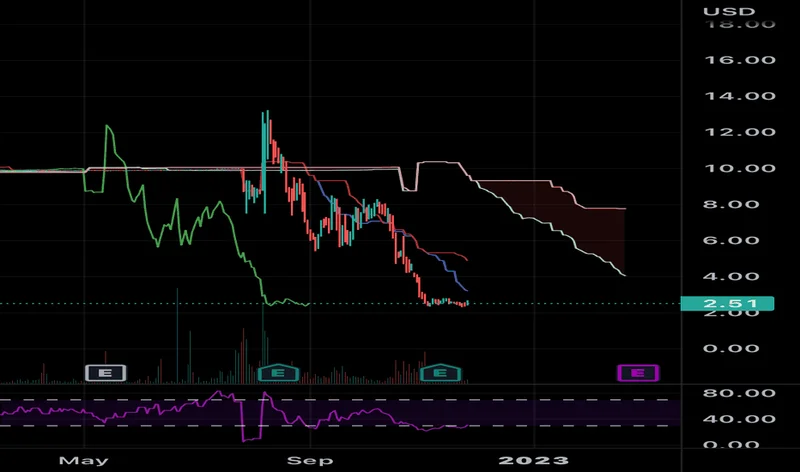
Look at the stock charts. Rigetti is up over 5,000% in a year. D-Wave, 3,500%. Does anyone seriously believe their fundamental technology has improved by 5,000% in 12 months? Offcourse not. This is pure, uncut speculation. It’s a feedback loop of press releases, analyst upgrades, and retail investors piling in, terrified of missing out on the next big thing.
The valuations are completely detached from reality. D-Wave is trading at over 400 times its sales. IonQ is right there with it. You're paying a Super Bowl premium for a team that hasn't even played a preseason game yet.
The articles pushing these stocks always have the same weaselly disclaimer: "devote no more than 1% of your portfolio." This is Wall Street code for, "We know this is basically a casino chip, but we want our commission. So please, go ahead and light a small amount of your money on fire. If it miraculously turns into a bonfire, we’ll take the credit. If it turns to ash, well, we told you so."
Maybe I'm just too jaded. Maybe one of these companies actually cracks the code and changes the world, making all their early backers disgustingly rich. But I’ve seen this movie before, whether it was with 3D printing, crypto, or the dot-com bubble. A few insiders always get rich, and a lot of regular people are left holding a bag of worthless stock certificates.
Yeah, I'll Pass
So, are these quantum stocks the dumbest bet you can make? Yes. Absolutely. It's a gamble on a scientific breakthrough that hasn't happened yet, wrapped in a speculative stock frenzy fueled by cheap hype. You have a better chance of making a million bucks by hitting a slot machine jackpot in Vegas. At least there you get a free drink. Here, all you get is a brokerage statement bleeding red while the founders cash out their shares and laugh all the way to the bank.