


Let me get this straight. On October 30, 2025, the crypto hype machine fired up its rusty engines and spat out two completely opposite stories about the same damn thing. On one hand, a new token called Pepenode was being hailed as the second coming—the "new crypto to explode," a revolution in meme coins. On the other hand, on the exact same day, it was being painted as a struggling loser, lagging behind some other presale darling called BlockchainFX.
You can't make this stuff up. This isn’t investing; it's a choose-your-own-adventure novel written by schizophrenic marketing interns. And we’re all just supposed to nod along, pick a side, and throw our rent money at whichever press release has the prettier graphics. Give me a break.
The Savior Arrives, Or So They Say
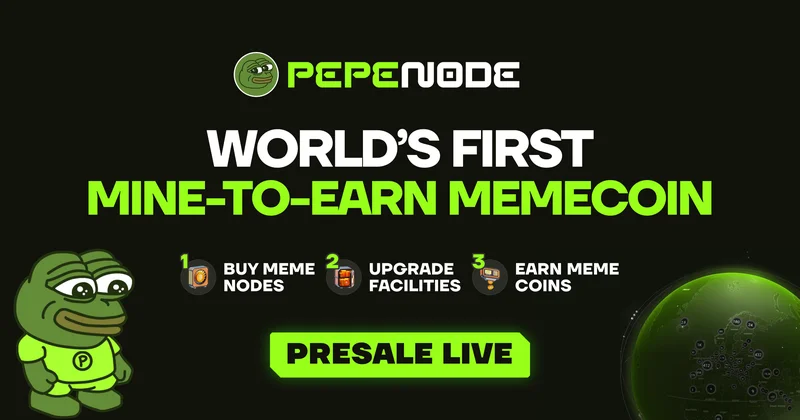
First, let’s look at the A-plot. Pepenode ($PEPENODE) arrives on the scene with a pitch that sounds like it was cooked up in a dorm room at 3 a.m. It’s the "world's first mine-to-earn meme coin." Let's just pause and deconstruct that word salad. They’ve taken "mining," a process that requires warehouses of computer hardware and burns enough electricity to power a small country, and turned it into a "simulator game."
This is a bad idea. No, 'bad' doesn't cover it—this is a five-alarm dumpster fire of a concept. You’re not mining. You’re playing a glorified version of FarmVille, clicking on virtual server racks instead of cartoon cows, and in return, you get tokens that have no value outside of this closed loop. It’s like a casino handing you a pile of their own branded chips and telling you you’re rich, so long as you never, ever try to leave the building.
The PR blitz was in full effect. Press releases screamed about a presale price of $0.0011227, a war chest approaching $2 million, and a "dynamic APY of 646%" for people who staked their tokens early. That number, 646%, is so absurdly specific and high that it feels less like a financial projection and more like a randomly generated password. Who are they trying to fool with this? Are we supposed to believe that you can just invent a token, attach a clicking game to it, promise impossible returns, and create sustainable value?
Apparently, yes. Because people were buying it. The narrative was all about getting in on the ground floor, becoming a "meme coin millionaire." It’s the same old song and dance, just with a new coat of Pepe-green paint. They promise utility, community, and a deflationary mechanic where 70% of tokens spent on in-game upgrades get burned. It all sounds vaguely plausible until you realize the entire economy is based on convincing more people to buy into the game you’re already playing. It's a game of musical chairs where the last one in has to pay for everyone else's dinner.
The Body Isn't Even Cold Yet...
But here's where the story gets truly pathetic. While one set of paid-for articles was anointing Pepenode as the next Shiba Inu, another set, published on the exact same day, was kicking dirt on its grave. A glowing review for a competitor, BlockchainFX, casually mentions that Pepenode is "struggling to keep pace" and has "slower traction."
Picture it: you're some hopeful crypto degen, scrolling through your news feed. At 11:28 AM, you see a headline: New Crypto to Explode: Pepenode (PEPENODE) Set to Surge in 2025. Your heart races. You think, this is it, my ticket out of my parents' basement. You start moving funds to your MetaMask wallet. But then, an hour later, another headline pops up: BlockchainFX Becomes the Best Crypto Presale of Q4 2025 as Pepenode and Coldware Struggle to Match Its $10.4M Surge.
What are you supposed to do with that? One source says it's the messiah, the other says it's a leper. The whiplash is enough to give you a concussion. It exposes the entire presale market for what it is: a battlefield of competing press releases. Nothing is real. There is no objective analysis. There are just narratives, bought and paid for, designed to manipulate your FOMO. It’s all designed to create urgency, and offcourse it works on some people.
This isn’t about fundamentals or technology. It’s about whose marketing budget is bigger. BlockchainFX raised over $10 million, so they could afford to run articles that not only promoted their own token but actively trashed their smaller competitors. It's a brilliant marketing strategy. No, 'brilliant' isn't right—it's predatory. It relies on the idea that you won't see both articles, that you'll only see the one they want you to see, and honestly... it probably works most of the time.
Then again, maybe I'm the crazy one. Maybe the key to crypto investing is to just read the headlines from even-numbered hours and ignore the ones from odd-numbered hours. It makes about as much sense as anything else in this space. I find myself wondering what happens to the people who bought into the Pepenode hype only to see it publicly kneecapped before the presale was even over. Do they double down out of spite, or do they quietly accept that they just got played?
Just Another Tuesday in the Digital Casino
Look, at the end of the day, this was never about Pepenode. Or BlockchainFX, for that matter. Swap the names out—it doesn't matter. They are interchangeable cogs in a machine designed to separate hopeful people from their money. The real story here is the grotesque efficiency of the crypto PR industry, which can simultaneously manufacture a king and a court jester from the same lump of code and sell both stories to different audiences. It's a system that thrives on noise, confusion, and the deeply human fear of missing out. And next week, it'll do it all over again with two new names you've never heard of. Don't say I didn't warn you.