


The European bourses were a picture of indecision on the morning of September 26th. Futures contracts flickered between green and red, a nervous tic betraying a market holding its breath. Everyone was waiting on the next set of US inflation numbers, the latest oracle reading that would dictate the central banks’ next move. In the background, the familiar hum of macroeconomic static continued: Eurozone GDP growth was moderating, and while unemployment was ticking down, it stubbornly refused to return to pre-pandemic levels in several key economies.
On the surface, it was business as usual. A familiar narrative of sector rotation played out, with resilient tech and healthcare names like SAP SE and Siemens Healthineers AG propping up indices while volatile energy prices and regulatory crosswinds battered the financials. This is the daily weather report of the market, the kind of analysis that fills airtime and newsletters. It is also almost entirely irrelevant. The real story, the structural force shaping the volatility we now treat as normal, isn't found in these top-down economic indicators. It's in the market's own fractured psychology.
Scar Tissue vs. Social Proof: A Tale of Two Markets
The Great Investor Divide
An April 2025 study from Fidelity Investments provides the data that truly matters. It maps a behavioral fault line running directly through the investing public, a schism so profound it creates two entirely different markets operating in the same space. The study found that 64% of self-directed investors expected their portfolios to perform the same or better in the coming months, a figure that suggests a baseline of stubborn optimism. Nearly half viewed market dips not as a warning, but as a buying opportunity.
But peel back that top-line number, and the unified picture dissolves. The divide isn't based on wealth or geography; it's based on time. On one side, you have the tenured investors, those with a decade or more of experience. On the other, the new cohort, with five years or less under their belts. Their worldviews are not just different; they are fundamentally incompatible.
Consider the veterans. Sixty-nine percent of them view market volatility as an expected, normal feature of the landscape. They prioritize limiting losses. My analysis of the data shows a clear defensive posture; 35% of this group explicitly stated a lower risk tolerance in 2025 compared to previous years. They’ve seen this before. They remember the visceral shock of the S&P 500 falling over 30% in a matter of weeks in 2020. They remember the grinding, soul-crushing 57% collapse from peak to trough during the 2008 financial crisis. Their caution isn't theoretical; it's scar tissue.
Now, look at the new cohort. They are not just bullish; they are structurally different animals. Nearly half of them (48% to be precise) are actively seeking out higher-growth stocks. They are five times more likely than the seasoned cohort to be planning their first foray into margin and options trading. While only about a third of tenured investors are familiar with crypto, a staggering 72% of the newer class are. They speak a different language, one of asymmetrical bets and digital assets.
This is where I find the data genuinely alarming. The divergence isn't just in risk appetite, but in the very source code of their decision-making. Over one-third of these newer investors admit to making most of their investing decisions based on social media. One-third. For the tenured group, that figure is just one-tenth. One group is reading historical performance charts and balance sheets; the other is reading subreddits and trending tickers.
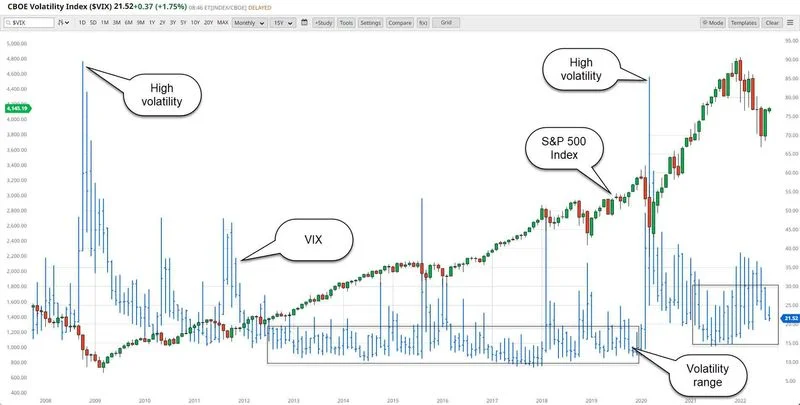
I've looked at hundreds of these sentiment reports over the years, and this particular data point—the explicit reliance on social media for financial decisions—represents a paradigm shift. We are no longer talking about a market that digests news and fundamentals to arrive at a price. We are looking at a market where a significant, and highly active, portion of its participants operate within a self-referential information ecosystem, a feedback loop of memes and momentum that can become entirely detached from underlying economic reality.
Of course, a methodological critique is warranted here. The Fidelity study focuses on "self-directed" investors, and the definitions of "successful" and "unsuccessful" are based on self-reporting. (A classic polling problem: everyone thinks they are an above-average driver). Is it possible that "unsuccessful" investors are simply more honest about their influences? Perhaps. But the sheer magnitude of the discrepancy in information sources between the two age cohorts cannot be dismissed as a simple reporting bias. It signals a fundamental schism.
This isn't just an academic curiosity. It is an active and powerful engine of volatility. The market is now a tug-of-war between two opposing gravitational forces. One is the cautious, historically-informed capital of the tenured investor class, a group that sells into strength and preserves capital. The other is the aggressive, sentiment-driven flow from the newer cohort, a group that sees every 5% dip as a generational buying opportunity and is increasingly using leverage to amplify their conviction.
The events that shaped the older cohort—the dot-com bust, 2008, the U.S.-China trade war’s 400-point daily swings—are, for the new cohort, little more than lines on a historical chart. Their formative experience was the V-shaped recovery of 2020, a crash-and-rebound so swift it taught a dangerous lesson: that every crisis is temporary and every dip is meant to be bought. It created a generation of investors who have been rewarded for the very behaviors—chasing momentum, ignoring valuation, using leverage—that wiped out their predecessors.
So as we watch the market twitch in anticipation of the next inflation print or central bank statement, we are missing the point. The most significant risk isn't external. It's not a single data point on GDP or unemployment. It is the unstable equilibrium created by these two warring psychologies, coexisting in the same ticker tape. One side is playing chess, thinking about the long-term consequences of rising interest rates. The other is playing a high-speed video game, fueled by social media sentiment and a belief that the rules of the old world no longer apply. This internal conflict is the real story, and it ensures that volatility is no longer a bug, but a permanent feature.
###
A Collision of Priors
The data doesn't suggest a debate; it suggests an impending collision. We have one market cohort whose strategy is built on the hard-learned lessons of the last 25 years of financial crises, and another whose strategy is built on the last 25 minutes of social media chatter. These two models for reality cannot both be correct. Eventually, the market will brutally invalidate one of them. The only open question is the scale of the damage when it does.
Reference article source: